Indonesia steps up Southeast Asia’s outbreak preparedness with pandemic simulation exercise
JAKARTA, 3 SEP 2026—Indonesia is advancing Southeast Asia’s readiness to tackle a future epidemic or pandemic threat by conducting a landmark pandemic simulation exercise that will strengthen efforts to rapidly develop safe and effective vaccines and other tools against a new ‘Disease X’.
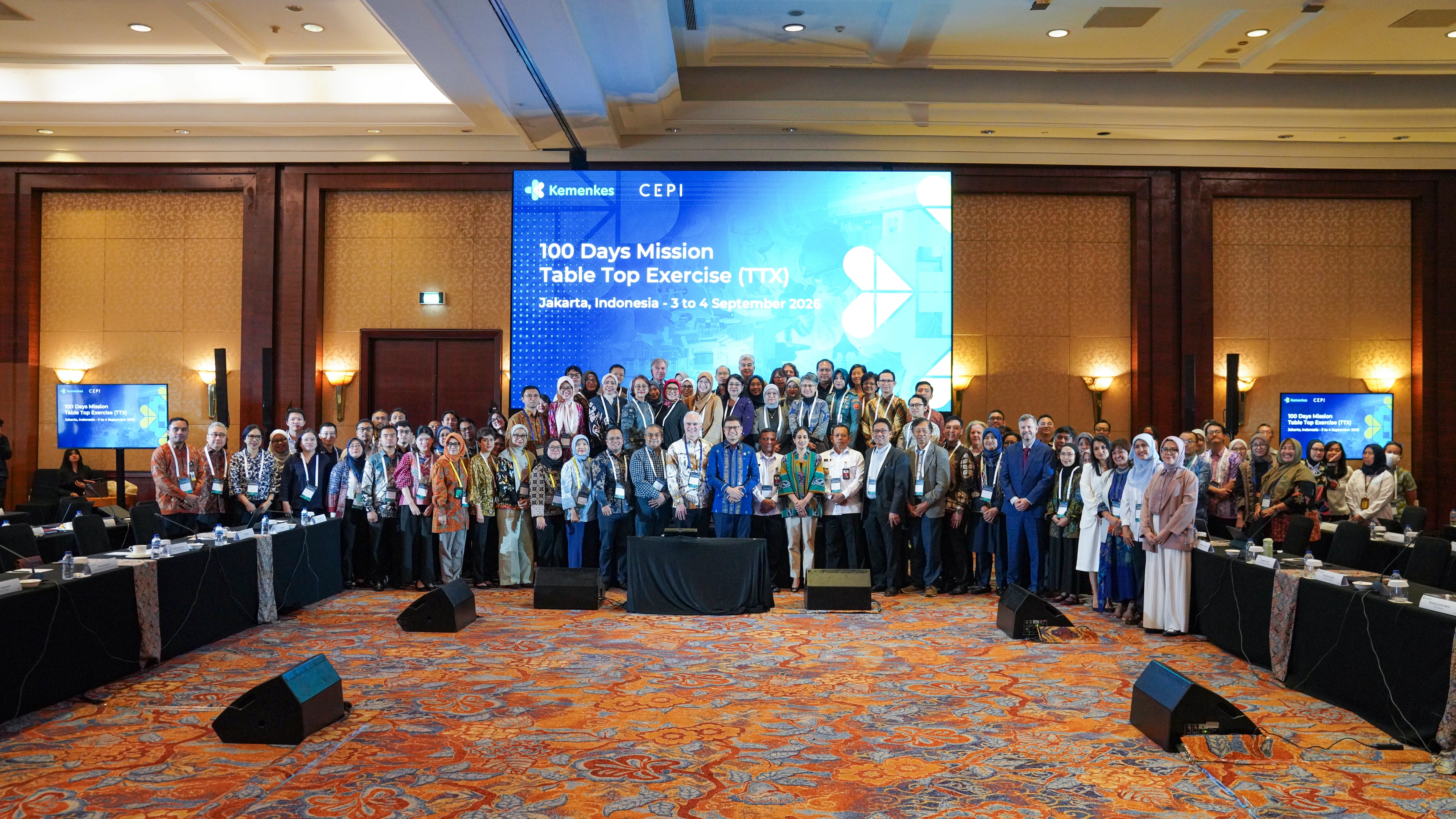
Over 120 experts working across the vaccine and epidemic preparedness research ecosystem in Indonesia and the region took part in the table-top event launching today in Jakarta. The event is co-hosted by the Indonesian Ministry of Health and the Coalition for Epidemic Preparedness Innovations (CEPI), the global organisation dedicated to transforming the world’s response to epidemic and pandemic threats.
The event seeks to build on Indonesia and CEPI’s shared vision to better prepare the world to face emerging infectious disease outbreaks. This vision is built on advancing scientific research, technology and cooperation to create the tools to reduce epidemic and pandemic risks.
“If we know that a threat can kill millions or even billions of our brothers and sisters, then we must be prepared for it. We must do the same—or better—to prepare for the next war against disease by investing seriously in saving lives,” said Budi Gunadi Sadikin, Indonesia’s Minister of Health during the Opening Session 100 Days Mission Table Top Exercise in Jakarta, on Thursday September 3rd.
Minister Budi continued, “As we host this landmark simulation exercise with CEPI, we are actively stress-testing our national capabilities—from deploying Point-of-Care Testing devices across our primary health centres to strengthening our genome sequencing network. Achieving the 100 Days Mission requires us to build robust scientific, surveillance, manufacturing and regulatory ecosystems. Through strategic partnerships and enhanced preparedness, Indonesia is proud to lead the way in ensuring our region and the world are ready to tackle the next 'Disease X'.”
Alongside experts from across academic and private organisations, including specialists in areas such as virus surveillance, laboratory testing, clinical trials, Artificial Intelligence, biosecurity, manufacturing, regulatory, access and policy, event attendees include Indonesia’s Ministry of Health, Indonesian Food and Drug Authority, Ministry of Agriculture, Ministry of Defence, Ministry of Foreign Affairs and WHO Indonesia. Representatives from health ministries and regulatory bodies across Malaysia, Singapore, and Australia were also in attendance as observers to the event to leverage lessons learned from the exercise for their own national outbreak preparedness.
The exercise will present a fictional case of a deadly never-before-seen ‘Nipah-X’ outbreak, a pathogen related to the deadly bat-borne Nipah virus which is known to affect the region. The scenario imagines a fictitious ‘Nipah-X’ virus spreading from infected livestock to people within days, with cases rapidly escalating through events including an international music festival. Experts will be invited to explore, discuss and share feedback on how they can collaborate and leverage the full breadth of Indonesia’s pandemic preparedness capability and infrastructure to rapidly develop a new vaccine in as little as 100 days from identifying the new disease.
The 100-day vaccine target, known as the 100 Days Mission, is a goal spearheaded by CEPI and embraced by the G7 and G20 nations – including Indonesia – that aims to compress the time it takes to develop a vaccine against a newly-identified virus to a third of the time it took to create the first COVID-19 vaccines. Acting within 100 days could help stop a pandemic in its tracks and enable vaccine doses to reach those who need them most in a public health emergency.
“Indonesia has established itself as a globally recognised force within vaccine manufacturing and health security, so this pandemic simulation exercise serves as a prime opportunity to work with leading experts across Indonesia’s vaccine chain to plan local responses to an imagined viral threat,” explains Dr Richard Hatchett, CEO of CEPI. “The world could have saved more than 8 million lives and avoided trillions in economic losses if a COVID-19 vaccine had been developed within 100 days. That is exactly why exercises like this are so important: they stress-test our vaccine response and containment strategies, helping ensure we can respond faster and more effectively when the next health emergency strikes.”
The exercise, running over two days this week, is one of a series CEPI is hosting with Governments and partners around the world to map and test out readiness to conduct a rapid vaccine R&D response to a novel virus outbreak as part of its new strategy, launching next year, which aims to transform the world’s response to epidemic and pandemic threats.
Learnings from this exercise will help strengthen Indonesia’s ability to respond to future outbreaks and reflects a core ambition of CEPI’s new strategy to make the 100 Days Mission a reality by testing and building national and regional response capabilities before the next pandemic.
Indonesia is a key partner to and investor in CEPI. The Government of Indonesia has provided US$6 million in funding to advance CEPI’s investments in innovative research and technologies against known disease threats and a future ‘Disease X’. Indonesia’s national vaccine manufacturer, Bio Farma, which services over 130 countries worldwide, is also a member of CEPI’s vaccine manufacturing facility network which seeks to increase emerging disease vaccine capacity and capabilities in the Global South.
CEPI Press
- Email:
- [email protected]
- Phone:
- +447387055214
Ministry of Health, Indonesia
- Email:
- [email protected]
- Phone:
- 1500-1567

Final preparations underway for pivotal Phase 2/3 Bundibugyo vaccine trial
Tracking Lassa fever: Where are we up to?