- CEPI to provide up to US$8.2 million in additional funding to the International Vaccine Institute (IVI) and MRC Unit The Gambia (MRCG) to support the implementation of Africa CDC’s hub-and-spoke clinical trial model in West Africa.
- The model connects experienced clinical trial “hubs” to a network of “spoke” sites closer to outbreak-prone areas, keeping them warm, connected and ready to generate clinical evidence rapidly when an outbreak strikes, and closely aligns with CEPI's Research Preparedness Program.
26 October 2026; OSLO; — CEPI's Research Preparedness Program, which aims to strengthen regional clinical trial readiness and emergency evidence generation, today announced up to US$8.2 million in additional funding to the Technical Coordinating Partners leading its West Africa component — the International Vaccine Institute (IVI) and MRC Unit The Gambia at LSHTM (MRCG) — to support implementation of the Africa Centres for Disease Control and Prevention (Africa CDC)'s hub-and-spoke clinical trial model.
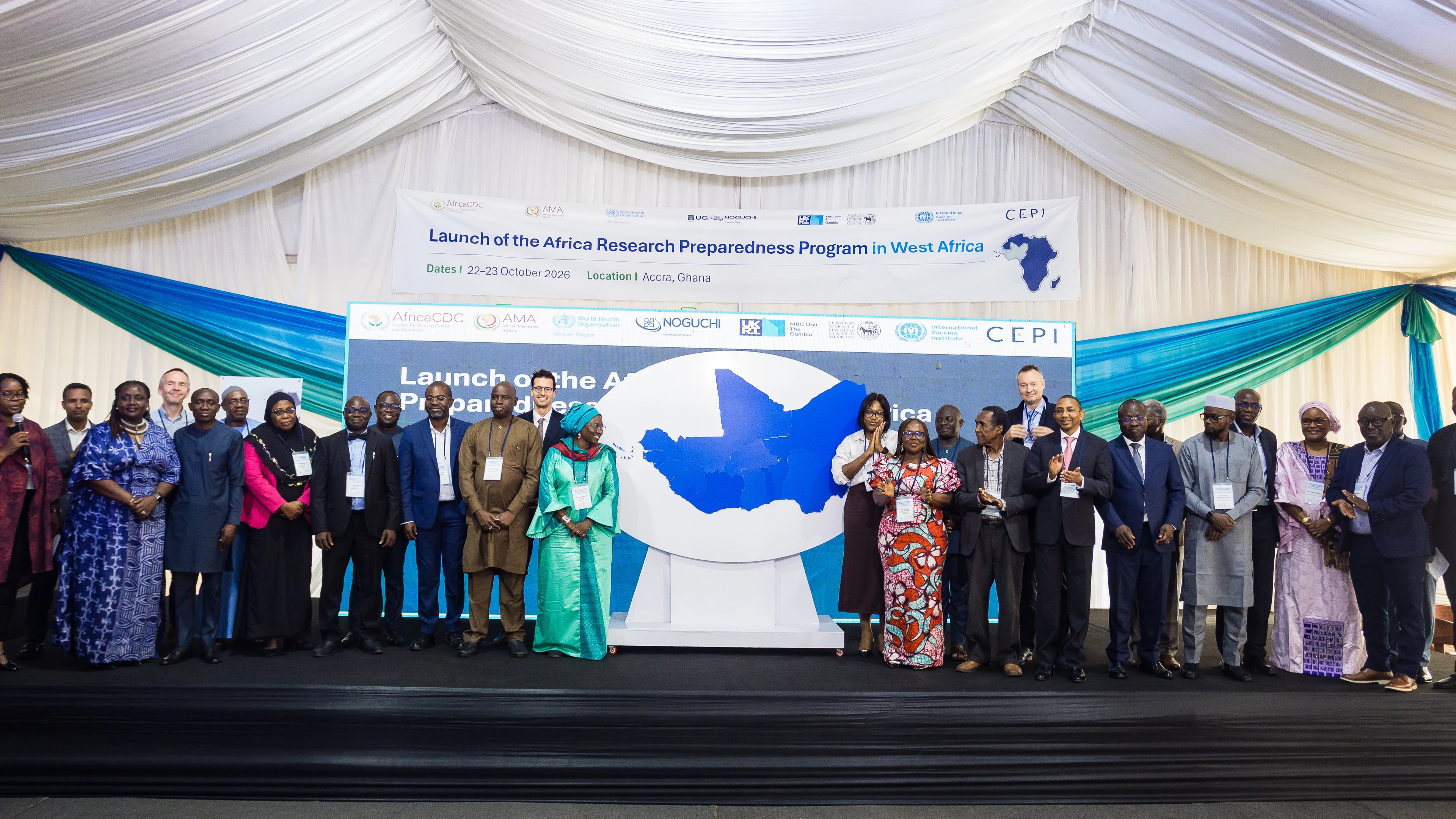
The funding, announced at a launch event on 22nd October in Accra convened by Africa CDC, African Medicines Agency, WHO AFRO and CEPI, supports Africa CDC’s hub-and-spoke network which connects experienced clinical trial research “hubs” to a wider network of “spoke” sites closer to outbreak-prone areas. It is designed to enable faster, more coordinated generation of clinical evidence during epidemics and pandemics, strengthening regional readiness for future health emergencies. The initial implementation will focus on West Africa, before expanding to other regions of Africa.
“Strengthening clinical trial systems before outbreaks occur, in regions where they are more common, is critical if we are to generate evidence without delay when new threats emerge,” said Dr Richard Hatchett, CEPI CEO. “By supporting Africa CDC’s hub-and-spoke model, we are helping to build a better connected and coordinated regional clinical research network — fully aligned with CEPI’s 3.0 Strategy, which has a key focus on strengthening globally connected research networks to accelerate outbreak response and the development of vaccines.”
Across Africa, multiple outbreaks of infectious diseases occur each year that rapidly spread across communities and borders—many have no approved vaccines to defend against them. The ongoing Bundibugyo ebolavirus outbreak in the Democratic Republic of the Congo is a stark, current example of such. This recurring risk underscores the importance of strengthening clinical research systems in advance, so that clinical studies needed to develop countermeasures can be initiated without delay when new threats emerge.
“Health sovereignty means Africa generating its own evidence, on its own soil, for its own people. With the hub-and-spoke model, African clinical trial sites will no longer be activated only when a crisis arrives. Instead, they will be kept warm, connected and ready. Africa CDC welcomes CEPI’s investment and the leadership of our Technical Coordinating Partners and will work with Member States to extend this network beyond West Africa to every region of the continent.”— H.E. Dr Jean Kaseya, Director-General, Africa CDC
Africa CDC’s hub-and-spoke model is designed to strengthen collaboration across clinical trial sites and ensure that research capacity built during routine periods can be rapidly activated during outbreaks. By improving coordination between sites across countries, the model supports more efficient and standardised generation of clinical evidence when new disease threats emerge. It also helps ensure that clinical research capacity is more widely distributed and sustainably embedded within national and regional systems, enabling faster mobilisation during outbreaks.
The hub-and-spoke model is closely aligned with CEPI’s Research Preparedness Program—also formally launched at the Accra event—which aims to strengthen clinical trial site ability to rapidly pivot from routine research to evidence generation in outbreaks, bolstering the related systems and skills in regions at highest risk of epidemic and pandemic threats. The Program supports the establishment and maintenance of “warm” clinical trial sites — sites with the infrastructure, trained staff and systems needed to rapidly activate clinical research when an outbreak occurs. This is in line with CEPI’s 100 Days Mission — a goal of developing safe and effective vaccines within 100 days of identifying a new pandemic threat. With this latest funding, CEPI has now committed a total of US $28.8 million to the Program, primarily supporting clinical trial sites in West Africa, alongside a few sites in East and Central Africa too.
The clinical trial capabilities strengthened through CEPI’s support will be designed for use by a wide range of partners, helping to ensure sustainability and interoperability across vaccine, diagnostic and therapeutic research, with rigorous open-access principles applied to support the broad and equitable use of data and results. This approach is intended to increase the long-term value and flexibility of the network beyond individual outbreaks, organisations or product developers.
Additional quotes from partners:
“A key to the success of Africa CDC’s hub-and-spoke model is strong ownership by the hub and spoke institutions themselves,” said Dr Jerome H. Kim, Director General of the International Vaccine Institute (IVI). “IVI is committed to supporting this initiative as part of our mission to strengthen equitable and sustainable vaccine research capacity and, as a strategic priority, help improve preparedness for future outbreaks.” Dr. Florian Marks, Deputy Director General of Epidemiology, Public Health, Impact at IVI, added, “As one of CEPI’s Technical Coordinating Partners supporting the initiative, IVI recognizes that long-term success will also depend on sustained collaboration and continuous research activity across the network. Keeping sites actively engaged between outbreaks is essential to the ability to rapidly respond when new threats emerge.”
"Effective preparedness depends on sustained investment in research systems, people and partnerships long before a health emergency occurs. With our experience implementing and supporting clinical trials in the region and through this collaboration with CEPI, IVI, Africa CDC and regional partners, we are helping to strengthen a connected network of clinical trial sites that can generate evidence rapidly, while building lasting research capacity across West Africa,” said Professor Ed Clarke, Director, MRC Unit The Gambia at LSHTM.
“No single institution can make Africa research-ready on its own. WHO, Africa CDC, the African Medicines Agency, CEPI, and our Member States must work as one ecosystem, with shared research priorities, harmonized protocols, coordinated ethics and regulatory review, and trial sites linked to national outbreak response systems. The Bundibugyo outbreak in the Democratic Republic of the Congo reinforces a fundamental lesson: we cannot wait for an emergency to build the research capacity an emergency demands. That capacity must be ready before an outbreak, activated rapidly during it, and sustained afterwards. WHO will bring its norms, tools and emergency operations experience to help generate high-quality evidence from the earliest days of an outbreak.” - Dr. Mohamed Yakub Janabi, WHO Regional Director for Africa
"The next outbreak will not wait for Africa to organise its research and regulatory systems. Research preparedness and regulatory preparedness must advance together. AMA is committed to building regulatory readiness into this network from the start, so that African-led evidence becomes timely access to life-saving medical products." - Dr Delese Mimi Darko, Director-General, African Medicines Agency
--ENDS--
Notes to editors
About CEPI’s Research Preparedness Program
CEPI’s Research Preparedness Program strengthens the ability of existing clinical trial sites in low‑ and middle‑income countries to generate high‑quality evidence during outbreaks. Working with regional Technical Coordinating Partners, the program supports priority epidemic‑prone regions to build sustainable, locally led research capabilities that can pivot rapidly from routine studies to emergency evidence generation. In West Africa, the initiative—facilitated by the International Vaccine Institute (IVI) and the MRC Unit The Gambia (MRCG)—has strengthened clinical trial readiness at multiple sites and is supporting Africa CDC to pilot a regionally governed hub-and-spoke clinical trial model. It also has a similar program in an earlier phase operating in East and Central Africa, with PATH acting as the initial Technical Coordinating Partner. The Research Preparedness Program forms a key part of CEPI’s contribution to the 100 Days Mission.
About CEPI
CEPI is a global partnership between public, private, philanthropic and civil organisations. Its mission is to accelerate the development of vaccines and other biologic countermeasures against epidemic and pandemic threats so they can be accessible to all people in need. Central to CEPI’s pandemic-beating plan is the ‘100 Days Mission’ - the goal to develop safe, effective and accessible vaccines against new threats in just 100 days. CEPI is seeking $2.5 billion to execute CEPI 3.0, its 2027-2031 strategy, which will systematically reduce the likelihood, impact and cost of epidemics and pandemics by driving the 100 Days Mission towards an operational reality. Learn more at CEPI.net.
About Africa CDC
The Africa Centres for Disease Control and Prevention (Africa CDC) is the African Union’s autonomous public health agency. Established in 2016 and launched in 2017, it works with Member States to strengthen public health systems and improve disease prevention, preparedness and emergency response. Headquartered in Addis Ababa, it operates through five Regional Coordinating Centres. For more information, visit: http://www.africacdc.org and follow Africa CDC on LinkedIn, X, Facebook, and YouTube.
About IVI
The International Vaccine Institute (IVI) is an independent international organization originally established at the initiative of the United Nations Development Programme in 1997. Its mission is to discover, develop, and deliver safe, effective, and affordable vaccines—empowering vaccine equity, impact, and sustainability globally.
IVI’s current portfolio includes vaccines in multiple stages of pre-clinical and clinical development targeting infectious diseases that significantly impact low- and middle-income countries, including cholera, typhoid fever, chikungunya, shigellosis, salmonellosis, schistosomiasis, hepatitis E, HPV- and group A strep-related diseases, and COVID-19. IVI developed the world’s first low-cost oral cholera vaccine and a new-generation typhoid conjugate vaccine, both pre-qualified by the World Health Organization (WHO).
IVI is headquartered in Seoul, Republic of Korea with a Europe Regional Office in Sweden, an Africa Regional Office in Rwanda, a Country Office in Austria, and a Country and Project Office in Kenya. IVI additionally co-founded the Hong Kong Jockey Club Global Health Institute in Hong Kong and hosts Collaborating Centers in Bhutan, Burkina Faso, Ghana, Ethiopia, Nepal, and Madagascar. 44 countries and the WHO are members of IVI, and the governments of the Republic of Korea, Sweden, India, Finland, Austria, and Thailand provide state funding. For more information, please visit https://www.ivi.int.
About MRC Unit The Gambia at LSHTM
MRC Unit The Gambia at the London School of Hygiene & Tropical Medicine (MRCG at LSHTM) is one of Africa’s leading centres for health research, with a vision to save lives and improve health in The Gambia and around the world.
For more than 75 years, we have worked with the Government, communities and partners to train the next generation of African scientists and to reduce the burden of disease and death.
As a centre of excellence for research and training, the Unit remains committed to improving public health, by generating the scientific evidence that informs policy, drives implementation and delivers impact.
CEPI
- Email:
- [email protected]
- Phone:
- +447387055214
Africa CDC
- Email:
- [email protected]
- Phone:
- NA
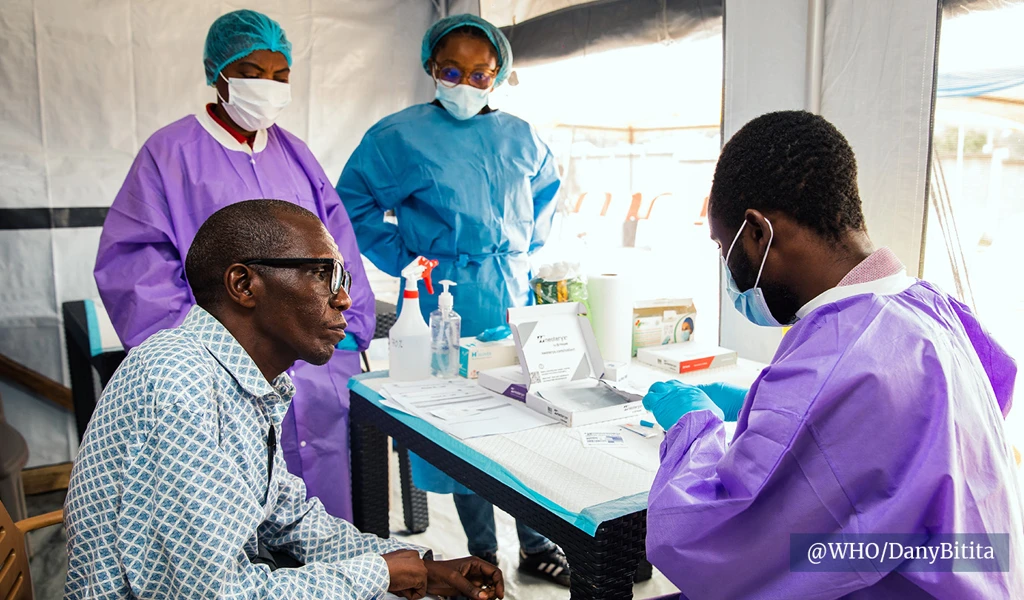
First participant vaccinated in pivotal Phase 2/3 Bundibugyo vaccine trial in DRC
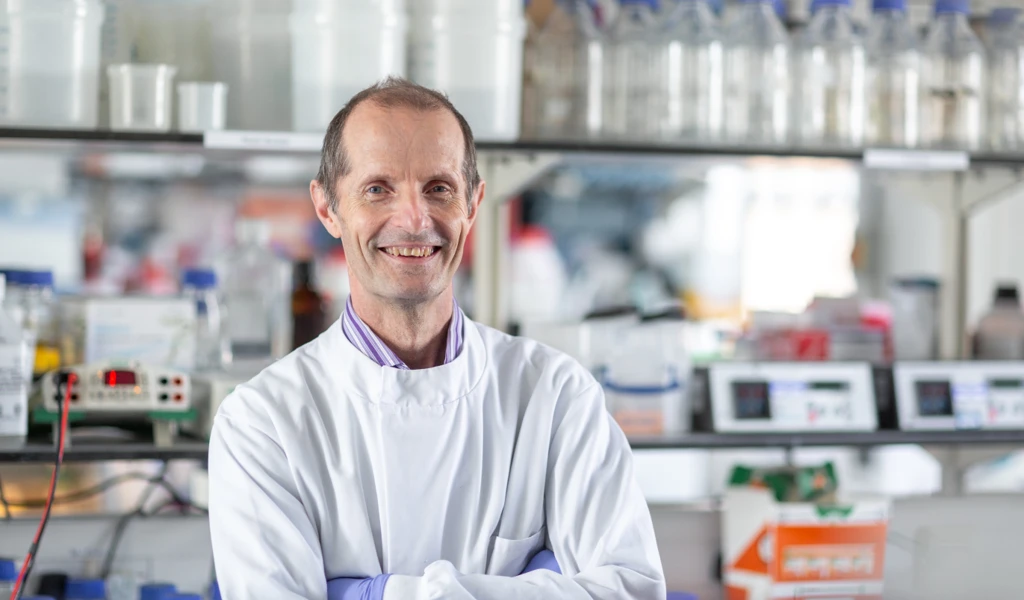
UK rabies vaccine trial could also unlock protection against Disease X