Making mRNA in Latin America: Brazil’s new vaccine platform heads into human trials
Brazil has produced vaccines for 50 years, but when the COVID-19 pandemic hit, it couldn’t make mRNA vaccines of its own. Now Brazil’s Fiocruz Bio-Manguinhos vaccine institute is about to change that, with the first Brazilian patented mRNA vaccine platform starting human trials in 2027.
CEPI spoke to Dr Patrícia Neves, who is leading the CEPI-supported project, about what that means for Brazil and Latin America, as well as for other countries and regions hoping to learn from it.
___________
When Patrícia Neves thinks back to the COVID pandemic, her memory is of an initial sense of helplessness.
Her country, Brazil, has a proud history of making vaccines – shots that have protected its people from diseases such as polio and meningitis for five decades since Fiocruz Bio-Manguinhos was founded in 1976 as part of a government commitment to public production. But when COVID-19 hit, Brazil’s manufacturing capabilities were not enough.
Without the development expertise to make its own new vaccines, the government had, like others, to wait for technology transfer to make the Oxford-AstraZeneca COVID vaccine and to rely on outside sources for the delivery of mRNA vaccines.
“We had to negotiate,” said Neves, who is now head of RNA product development at Bio-Manguinhos. “Even though we had great manufacturing capacity, we weren’t able to develop our own vaccines. We had to find someone to transfer the vaccine technology to us.”
Brazil’s goal since then has been to create and expand the scientific and manufacturing capabilities to design, develop and produce vaccines in one place – at home. And at the Bio-Manguinhos vaccine facility in Rio de Janeiro, that ambition is now being realised as part of a partnership with CEPI.
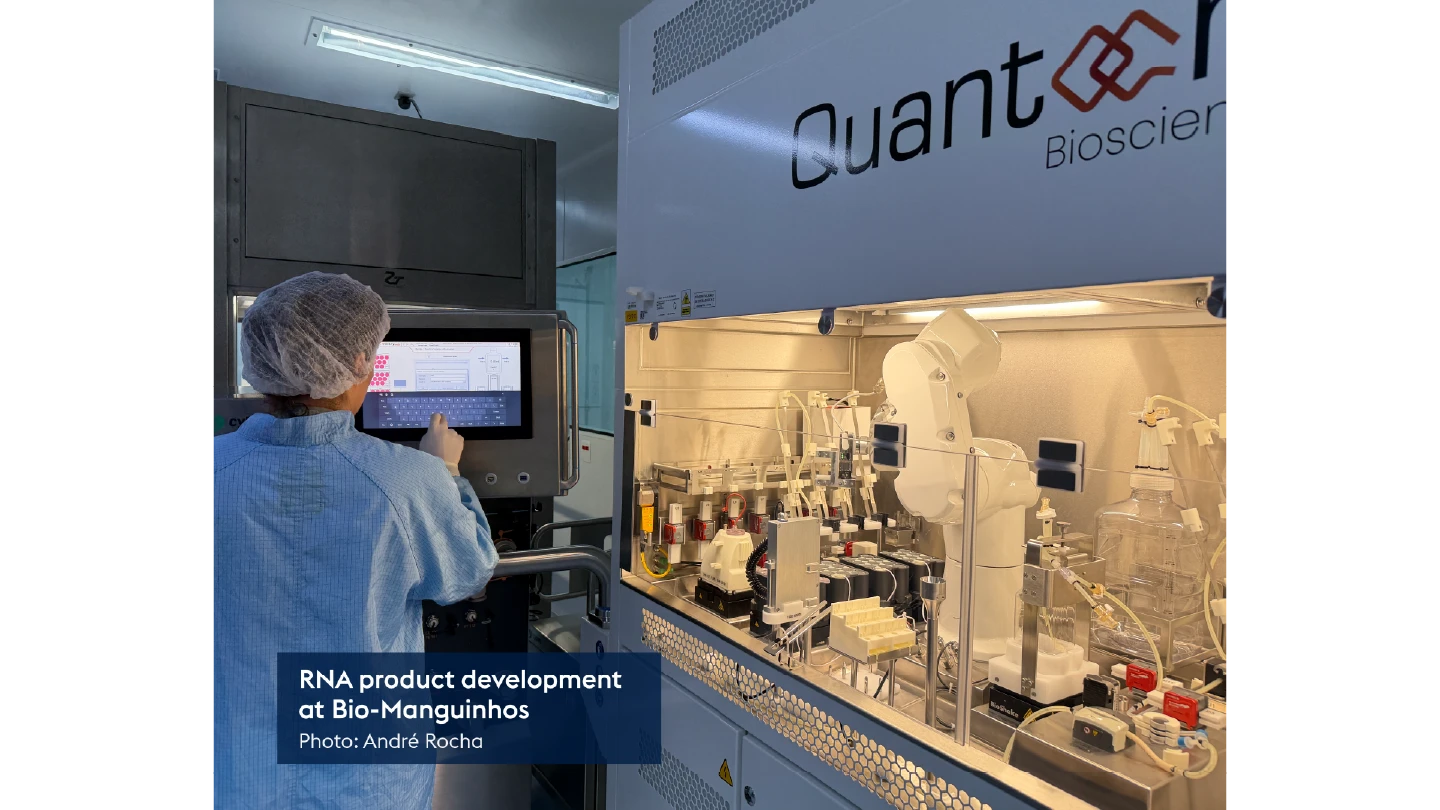
When it began, Nevez says, the team’s work was at the earliest stages – enough to show their mRNA idea was feasible but not enough to develop vaccines that could be trialed in people. The challenge was to show that Fiocruz Bio-Manguinhos could make an mRNA vaccine reliably, at pilot scale, in its own laboratories.
Neves says the team chose COVID-19 for its first mRNA vaccine candidate for practical reasons. COVID vaccination is part of Brazil’s national immunisation programme and is given every year to people in risk groups, so there is a ready-made need for it.
And the results are already encouraging. The development team has now produced more than seven batches of its mRNA COVID vaccine candidate and in August 2026, Brazil’s regulator gave permission for it to be tested in a Phase 1 human trial. The hope is that the first volunteers in the trial will be vaccinated in early 2027.
“Fiocruz brings decades of manufacturing experience and, now, a rapid-response mRNA vaccine platform it can adapt to new threats,” said Ian Hart, CEPI’s vaccine manufacturing lead. “That’s what our 100 Days Mission work is focused on: the ability to develop and produce vaccines rapidly across all regions, north and south, and closer to where outbreaks can start.”
For Neves and her colleagues, their “home-grown” mRNA COVID vaccine is the start of what they hope will be a much larger project. The mRNA vaccine platform can be adapted to new targets, and Fiocruz scientists are already testing it in a tuberculosis vaccine candidate.
They are also working on an mRNA vaccine against leishmaniasis, a parasitic skin disease that affects people in countries across Latin America and Africa, and have early proof of concept for others, including yellow fever and RSV.
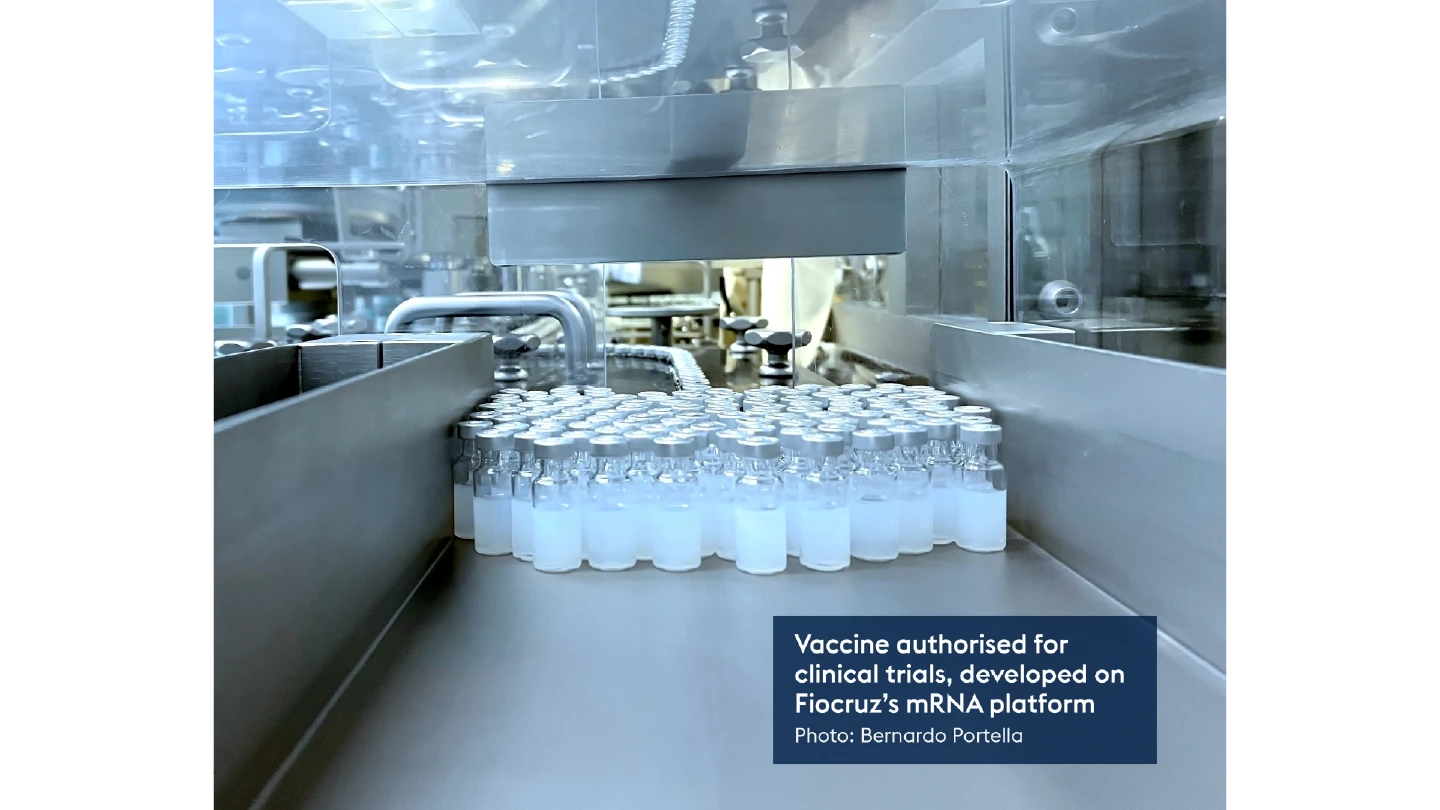
It’s this adaptability that will matter most when the next pandemic threat emerges. When COVID-19 hit, Brazil had the factories but not the science to design new vaccines. “Now we’ll have the development capacity together with the production capacity,” Neves said. “That makes a lot of difference in the event of pandemics.”
The plan is for the impact to also reach far beyond Brazil. Because Fiocruz is a government-backed organisation its interests are not just market driven, but also guided by cooperation and equity, Neves said, meaning its scientists are now eager to “share our knowledge with others”.
Fiocruz has already hosted researchers from other countries in Latin America, with more visits planned soon. Neves is also involved in efforts to bring African colleagues to Brazil. Her aim is to involve them earlier than technology transfer usually does. “We’d like to bring them to work with us from the beginning of the development,” she says.
While she knows it won’t be immediate, Neves is optimistic about how this expertise-sharing will help other countries in the global south to strengthen their own and the world’s health security. “We’ll need some time to see the impact,” she says, “but I think it will be a huge impact.