CEPI 3.0 explained: Platform technologies

Under CEPI 3.0, our work is organised around three priority areas: strengthening vaccine development across the pathogens and viral families most likely to spark new outbreaks; advancing rapid‑response platform technologies that can be adapted quickly to the unknown; and building interconnected global networks for research, manufacturing and regulatory readiness so the world can act as one system when new threats emerge.
If viral families help us understand what we’re preparing for, platforms determine how fast we can move. We spoke with CEPI’s Bruno Tricoire, Director of Chemistry, Manufacturing and Control, to unpack how this adaptable technology will help us to deliver CEPI 3.0 and the 100 Days Mission.
++
How does the platforms priority area ensure the next outbreak doesn’t catch the world off guard?
Platform-based vaccines, like mRNA, viral-vector or protein, give us a head start. Traditional vaccine development can take 10–15 years, but platforms collapse that timeline by providing a pre‑tested technological base, which means we’re not starting from scratch each time.
COVID‑19 made this clear. Many vaccine candidates were launched, but only a few succeeded at speed, and those that did were built on platforms with existing maturity. Platforms were the difference between waiting years and having vaccines within one to two.
Under CEPI 3.0, this technology helps ensure that when the next outbreak hits, we already have the tools, the data and the manufacturing capability to respond.
How does this approach move us from reacting to outbreaks to proactively preparing for them?
Platforms turn accumulated experience into readiness. Every vaccine developed on a platform strengthens the knowledge base for the next one, making development more predictable and more likely to succeed.
This scientific maturity is matched with real‑world capability. Platforms come with manufacturing facilities, trained staff and supply chains that can be kept ready to activate and able to switch on quickly when needed.
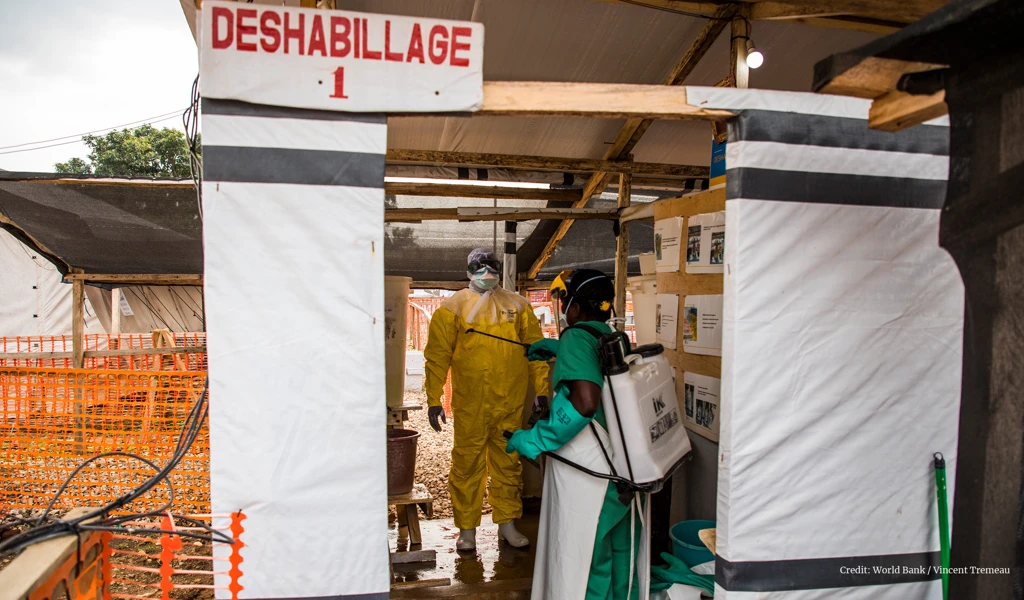
The current Bundibugyo ebolavirus outbreak shows this shift in practice. Our first candidates are all preferred platforms, starting in record time. Just two weeks was enough to get agreements in place for our partners and to start execution of the three initial vaccine candidate projects. These platforms—ChAdOx, mRNA or VSV—have either licensed products or regulatory discussions behind them and existing manufacturing capacity, which help us to move much faster.
How does the platforms approach help deliver the 100 Days Mission?
The 100 Days Mission is about accelerating timelines that were once measured in years into weeks. Platforms make that possible.
Manufacturing alone takes several weeks, even under ideal conditions. Without a platform, establishing the technology, processes and regulatory foundations can take months or years. Platforms remove that setup time, like having the production line already calibrated before the emergency begins.
They also reduce the trial‑and‑error that slows vaccine development. Vaccine R&D is inherently empirical, and failures are common. But as more vaccines are developed on a platform, it becomes more mature, increasing the likelihood of getting the right vaccine first time.
How do we ensure platform technologies are not only reserved for high‑income countries?
Equity is built into CEPI’s platform strategy from the outset. When selecting platforms, CEPI assesses attributes such as cost of goods, scalability and when appropriate the feasibility of transferring the technology to regional manufacturers.
Platforms also become easier to transfer as they mature. As more vaccines are developed on a platform, the knowledge, documentation and manufacturing processes become more standardised. This makes it easier for new partners, including those in low‑ and middle‑income regions, to adopt and use the technology.
How does the platform approach prepare us for Disease X?
Platforms are designed for uncertainty. They provide a common technological starting point that can be adapted in a sort of “plug-and-play” approach for many different pathogens, including those we haven’t yet identified.
This almost pathogen‑agnostic capability is essential. The world cannot prepare bespoke solutions for every possible virus. Platforms allow us to respond to a wide range of threats using the same underlying technology, reducing the likelihood that we will be starting from zero when Disease X emerges, giving us a vital head start.
CEPI invests in multiple platforms because no single technology works for every pathogen or every use case. mRNA may be the fastest, but it can be expensive and thermally fragile, while protein‑based vaccines may be more affordable at scale. But one thing we can be relatively certain of is that none of the platforms will work on all viral families. Different outbreaks require different tools, and CEPI’s portfolio approach reflects that.
How does this priority area rely on and strengthen the others?
Platforms sit at the centre of CEPI 3.0. They connect the scientific insights generated through the vaccines and viral families priority with the real‑world capabilities built through CEPI’s global networks.
The viral family framework helps identify which pathogens and antigens platforms need to be ready for. Platform investments, in turn, ensure that those insights can be translated quickly into vaccine candidates. And CEPI’s networks, spanning manufacturing, clinical trials, laboratories and regulation, ensure that platform‑based vaccines can move through development and into production at speed.
CEPI 3.0 cross-cutting themes explained: Biosecurity
CEPI 3.0 explained: Networks