[Last updated: 9 June 2026]
The World Health Organization has declared that an outbreak of disease caused by Bundibugyo ebolavirus in the Democratic Republic of Congo (DRC) and Uganda constitutes a public health emergency of international concern.
What is Bundibugyo and how dangerous is it? Can it kill you?
Bundibugyo ebolavirus is a species of Ebola virus that causes severe and often fatal viral haemorrhagic fever. It is a member of the Filovirus viral family and is related to Zaire ebolavirus, Sudan ebolavirus and filoviruses that cause haemorrhagic fevers such as Marburg virus and Ravn virus.
Bundibugyo ebolavirus was first identified in 2007 in the Bundibugyo district of western Uganda.
Previous Bundibugyo outbreaks have had case fatality rates of between 30 percent and 50 percent – suggesting this virus has around the same lethality as the Zaire ebolavirus strain which erupted into an international epidemic that spread from West Africa in 2014 to 2016.
When did this Bundibugyo outbreak start and where is it spreading? Which countries are at highest risk? Could this become a pandemic?
The WHO was first alerted by Congolese authorities on May 5, 2026, when the outbreak was initially reported as a high-mortality outbreak of unknown illness in Ituri Province in northeastern DRC.
On May 15, test results from 13 blood samples from suspected cases confirmed that eight of them were Bundibugyo virus disease, and health authorities were by then reporting more than 200 suspected cases in the outbreak. Later that same day, Ugandan authorities confirmed a case in a Congolese national in the Ugandan capital of Kampala.
DRC’s Ituri province is a commercial and migratory hub that borders South Sudan and Uganda. This proximity increases the risk of cross-border transmission into these neighbouring countries, according to the WHO.
The WHO says this outbreak does not meet the criteria of pandemic emergency, as defined in the International Health Regulations. Ebola viruses, while contagious and deadly, are not considered by experts to have pandemic potential because they are not respiratory viruses and do not spread through the air.
How does Bundibugyo virus spread? And what are the symptoms?
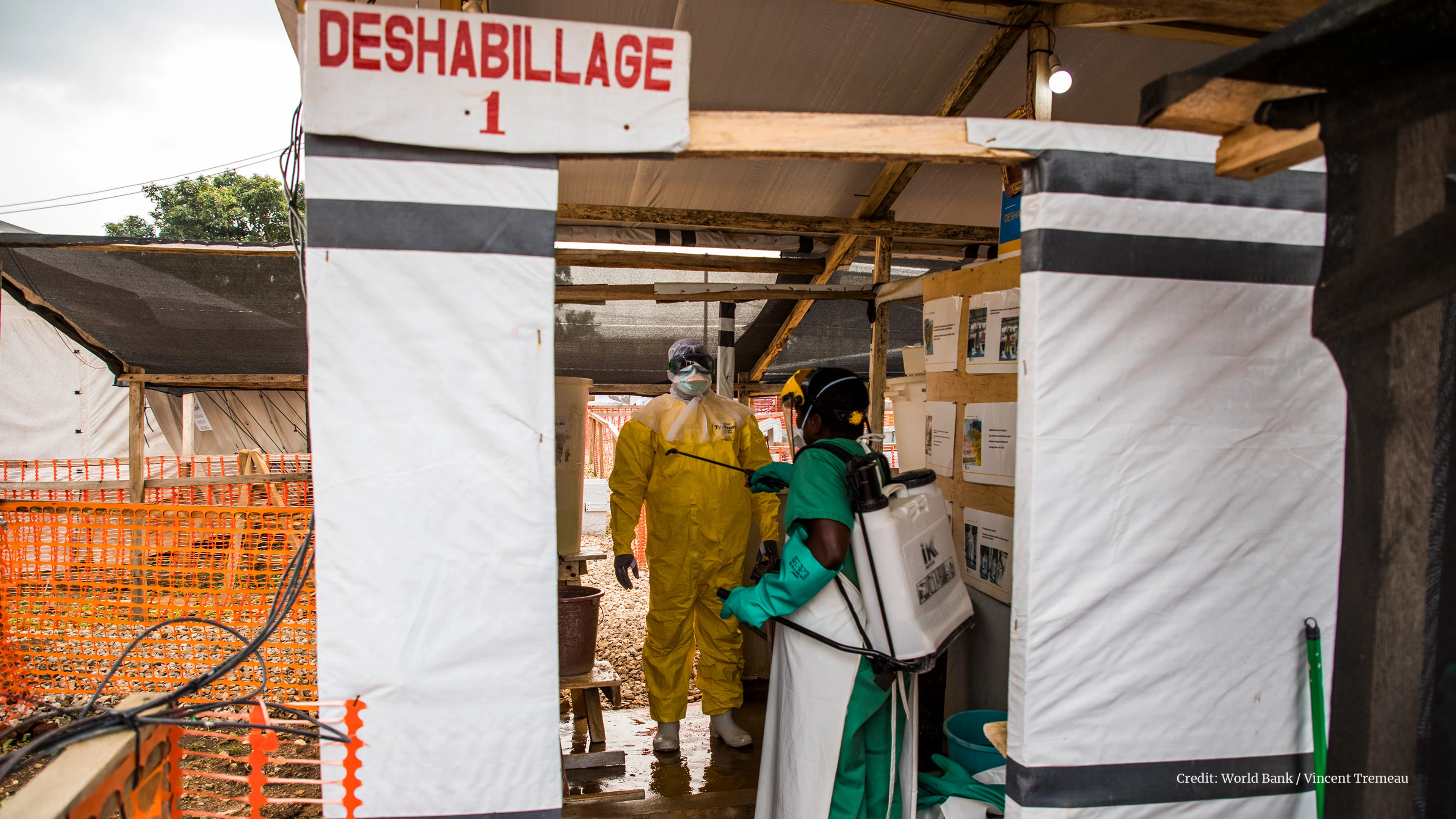
Bundibugyo virus spreads from person to person through direct contact with the blood or body fluids of a person who is sick with or has died from the disease or contact with objects or surfaces that have been contaminated with fluids such as blood, faeces and vomit from an infected person.
There is no evidence that it spreads easily through the air. The incubation period ranges from two to 21 days, and people are usually not infectious until symptom onset.
Because initial symptoms of fever, headache and muscle pain can be similar to the early signs of other infection that are endemic to areas where Ebolavirus outbreaks are common, diagnosis of Bundibugyo virus infection and the recognition of an outbreak is sometimes confused and delayed. Subsequent symptoms become increasingly severe, with vomiting, diarrhoea and, in many fatal cases, external and internal bleeding.
Is there a cure for Bundibugyo virus? Or a vaccine to protect against it?
There are no licensed vaccines for Bundibugyo virus, but some candidate vaccines have been looked at in preclinical testing. CEPI has activated its highest level of response and is urgently accelerating the development of Bundibugyo vaccine candidates.
CEPI’s swift response is enabled by its prescient viral family strategy that funds broad, cross‑cutting research across the families of viruses most likely to pose a future human pandemic threat – such as coronaviruses, for example, or poxviruses or arenaviruses. This preparedness research spans whole groups of related viruses rather than chasing one pathogen at a time.
The viral family approach means that CEPI had already invested in filovirus programmes - supporting studies in animals and potential multivalent vaccine design and platform development for several filoviruses, including Bundibugyo. With candidate designs that could be adapted to Bundibugyo virus already in the pipeline, CEPI has mobilised its networks and its laboratory and manufacturing partnerships to speed up the assessment of potential vaccine constructs that can be progressed into human trials as quickly as possible.
CEPI 3.0 cross-cutting themes explained: Biosecurity
CEPI 3.0 explained: Networks