- CEPI funding will advance vaccine candidates towards clinical trials as quickly as possible.
- Portfolio includes candidates under development by IAVI, Moderna and University of Oxford manufactured at Serum Institute of India.
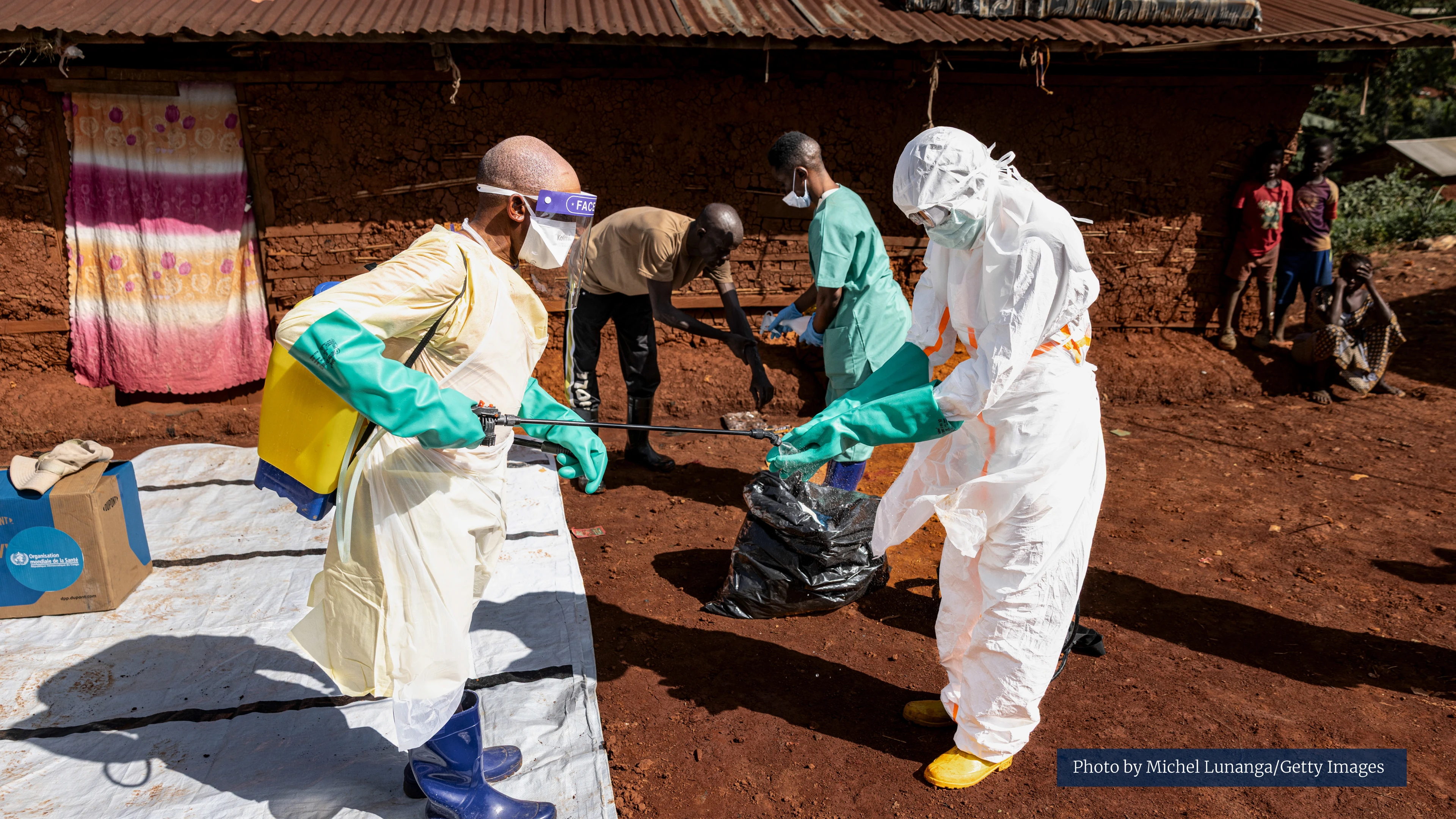
OSLO, 1 June 2026: The Coalition for Epidemic Preparedness Innovations (CEPI) will urgently accelerate development of three investigational vaccines targeting the Bundibugyo ebolavirus that has caused a rapidly spreading epidemic in the Democratic Republic of the Congo (DRC) and neighbouring Uganda. With no licensed vaccines available for Bundibugyo virus and none in clinical development, CEPI's action reflects the critical need to produce tools to help curtail the outbreak, complementing ongoing public health interventions by affected countries.
CEPI will invest in a portfolio of candidates under development from longstanding partners with proven capabilities. These include candidates developed by IAVI; Moderna; and the University of Oxford, which will be manufactured at the Serum Institute of India (SII). As work on these candidates begins, CEPI will continue to evaluate additional promising candidates to strengthen the pipeline, including through an open Call for Proposals, and expects to announce additional partnerships shortly.
"With Bundibugyo virus spreading rapidly and no licensed vaccines, every day counts in the race against this deadly disease,” said Dr Richard Hatchett, CEO of CEPI. “CEPI’s urgent funding and support for these three promising candidates aims to advance safe, effective vaccines to help control this epidemic.”
The current outbreak - declared a Public Health Emergency of International Concern (PHEIC) and a Public Health Emergency of Continental Security (PHECS) by the World Health Organisation (WHO) and Africa CDC, respectively - has already caused more than 900 suspected cases and more than 220 suspected deaths [1], making it the third largest Filovirus outbreak in history.
"CEPI's investment in three promising Bundibugyo virus vaccine candidates is an important step forward in our collective response. WHO is supporting the governments of DRC and Uganda as they lead the public health effort, while working with CEPI and partners to advance safe, effective vaccines at pace. A Bundibugyo vaccine could help to control this epidemic and strengthen preparedness for future outbreaks. This is exactly the kind of cross-sectoral collaboration that epidemic response demands," said Dr Tedros Adhanom Ghebreyesus, Director General of WHO.
“As we respond to an active Ebola outbreak in Africa, CEPI’s investment in three Bundibugyo ebolavirus vaccine candidates is both timely and critical to Africa’s health — as well as economic security and advancing Africa’s ambition to build sustainable R&D and vaccine manufacturing capacity on the continent. We couldn't be more proud of CEPI and the developers of these vaccines,” said H.E. Dr Jean Kaseya, Director General of Africa CDC.
The three vaccine candidates were selected based on CEPI's comprehensive global review of Bundibugyo virus vaccines in development and extensive consultation with WHO, Africa CDC, ANRS-MIE, Gavi and affected countries. Each uses a different validated vaccine technology to maximize the likelihood of success.
All of the underlying vaccine technology platforms have extensive safety data and have been used to develop vaccine candidates that have shown preclinical or clinical efficacy against related filoviruses such as Zaire Ebola virus, Sudan virus and Marburg virus. The safety data accumulated with the platforms and this prior experience with related viruses strongly suggests that safe and effective vaccines can be developed against the Bundibugyo virus.
CEPI's funding will rapidly advance each vaccine candidate so it is ready to begin clinical trials as quickly as possible. If Phase 1 trials are successful, CEPI anticipates working with partners to support late-stage trials to generate data for emergency use authorization or licensure.
Equitable access is core to these partnerships. CEPI and its development partners are committed to enabling rapid, affordable supply of Bundibugyo virus vaccines to affected countries and to the populations that need them.
CEPI's Bundibugyo virus vaccine portfolio
IAVI
CEPI has committed initial funding of up to US$3.2 million for preparations necessary to generate a Master Virus Seed stock – the starting material needed to manufacture a vaccine – and initiate testing of the seed in an established process using material originally developed at The University of Texas Medical Branch. This candidate uses the rVSV vaccine platform upon which an approved and WHO-prequalified vaccine against Zaire ebolavirus is based. Rapid onset of protective immunity after one dose is a key feature of vaccines using this platform, which is critical when vaccines are deployed in an outbreak setting.
Mark Feinberg, CEO and President of IAVI, said: “IAVI is grateful for CEPI’s swift and strategic investment in advancing this Bundibugyo vaccine candidate. This support enables us to accelerate efforts to advance the vaccine candidate toward clinical evaluation in response to an intensifying public health emergency, building on IAVI’s extensive experience with rVSV-based vaccines and Filovirus vaccine development.”
Moderna
CEPI has committed up to US$50 million for preclinical testing and Phase 1 clinical trials. CEPI will support simultaneous manufacturing of doses to enable large-scale Phase 2/3 trials to begin immediately if Phase 1 data supports progression. This candidate uses the same fast, flexible, scalable mRNA technology validated during COVID-19 and builds upon Moderna’s existing R&D on related Ebola viruses. The collaboration leverages CEPI's existing strategic partnership with Moderna.
Stéphane Bancel, Chief Executive Officer of Moderna, said: “At Moderna, we believe our mRNA platform can play an important role in responding rapidly to emerging infectious disease threats. We are proud to expand our strategic partnership with CEPI to advance a potential vaccine against Bundibugyo ebolavirus, leveraging our established technology and experience in related filoviruses. We will move with urgency and scientific rigor to support the response and help bring a potential vaccine closer to the communities that need it most.”
University of Oxford / Serum Institute of India
CEPI has committed initial funding of up to US$8.6 million to fund preclinical testing and other development activities to rapidly prepare for Phase 1 trials of a vaccine based on the University of Oxford's ChAdOx1 platform, which underpinned the Oxford/AstraZeneca COVID-19 vaccine. The funding will also support creation of a Master Virus Seed stock and manufacturing of clinical-grade doses at SII under CEPI’s pre-existing agreement with the company. This programme leverages CEPI's existing strategic partnership with the University of Oxford and SII's participation in CEPI's Vaccine Manufacturing Facility Network.
Professor Teresa Lambe OBE, Calleva Head of Vaccine Immunology at the Oxford Vaccine Group and Pandemic Sciences Institute, said: “We are grateful to work with CEPI and our global partners, including SII, to advance our candidate vaccine against BDBV. We are hopeful that through a coordinated global effort, we will be able to curb this outbreak and stop this virus in its tracks.”
Adar Poonawalla, CEO of the Serum Institute of India, said: “At moments like this, speed, scale and access is all that matters. SII will bring its manufacturing capabilities to this collaboration with CEPI and the University of Oxford to help advance a Bundibugyo virus vaccine candidate as quickly as possible, while supporting the shared goal of affordable access for affected countries if the vaccine proves successful.”
CEPI’s response to Bundibugyo virus
CEPI has rapidly mobilized human, technical, and financial resources to support R&D within nationally-led responses. This includes activating global networks of laboratories and clinical trial partners; modelling outbreak scenarios for clinical trial design; mobilizing manufacturing partners; and engaging regulators to align on regulatory pathways. CEPI is also coordinating with Gavi, the World Bank, and development finance institutions on potential surge financing beyond CEPI – including Gavi’s First Response Fund - for downstream manufacturing and vaccine procurement, contingent on trial outcomes.
This epidemic, alongside recent Hantavirus outbreaks, underscores the urgent need to strengthen public health responses, accelerate medical countermeasures development, and invest in preparedness for increasingly complex infectious disease threats. CEPI's response reinforces the importance of advancing R&D across viral families, strengthening vaccine platform readiness, and maintaining ready-to-activate networks - capabilities essential to delivering the 100 Days Mission and enabling equitable, rapid and resilient epidemic and pandemic responses.
[1] WHO Disease Outbreak News: Ebola disease caused by Bundibugyo virus, Democratic Republic of the Congo & Uganda
ENDS
Notes to editors
CEPI is seeking additional vaccine candidates via an open Call for Proposals here. The Call will support accelerated generation of preclinical, translational, and early clinical data to determine whether candidate vaccines could contribute to the current outbreak response, while strengthening the longer‑term filovirus vaccine pipeline.
About CEPI
CEPI is an innovative partnership between public, private, philanthropic and civil organisations. Its mission is to accelerate the development of vaccines and other biologic countermeasures against epidemic and pandemic threats so they can be accessible to all people in need. Central to CEPI’s pandemic-beating plan is the ‘100 Days Mission’ to develop safe, effective and accessible vaccines against new threats in just 100 days. CEPI is seeking $2.5 billion to execute CEPI 3.0, its 2027-2031 strategy which will systematically reduce the likelihood, impact and cost of epidemics and pandemics by driving the 100 Days Mission towards an operational reality. Learn more at CEPI.net.
CEPI
- Email:
- [email protected]
- Phone:
- +44 7387 055214
IAVI
- Email:
- [email protected]
- Phone:
- NA

UK rabies vaccine trial could also unlock protection against Disease X
_Andreas%20Kravik%20(Norway)_Chris%20Elmore%20(UK)_Abnet%20Zeleke%20(Ethiopia)_Mamadou%20Ndiaye%20(Senegal)_Sept%2021_2026.webp)
Ethiopia, Norway and UK commit US$240 million to CEPI’s global plan to tackle epidemic and pandemic threats