From ambition to action: Turning CEPI’s strategy into tangible impact
What does success look like when the goal is to respond to a pandemic threat with new vaccines in just 100 days?
This 100 Days Mission, as it is known—a goal embraced by the G7 and G20—is the benchmark for preventing future pandemics. But hitting that target requires more than scientific breakthroughs; it requires an ecosystem ready to move at unprecedented speed.
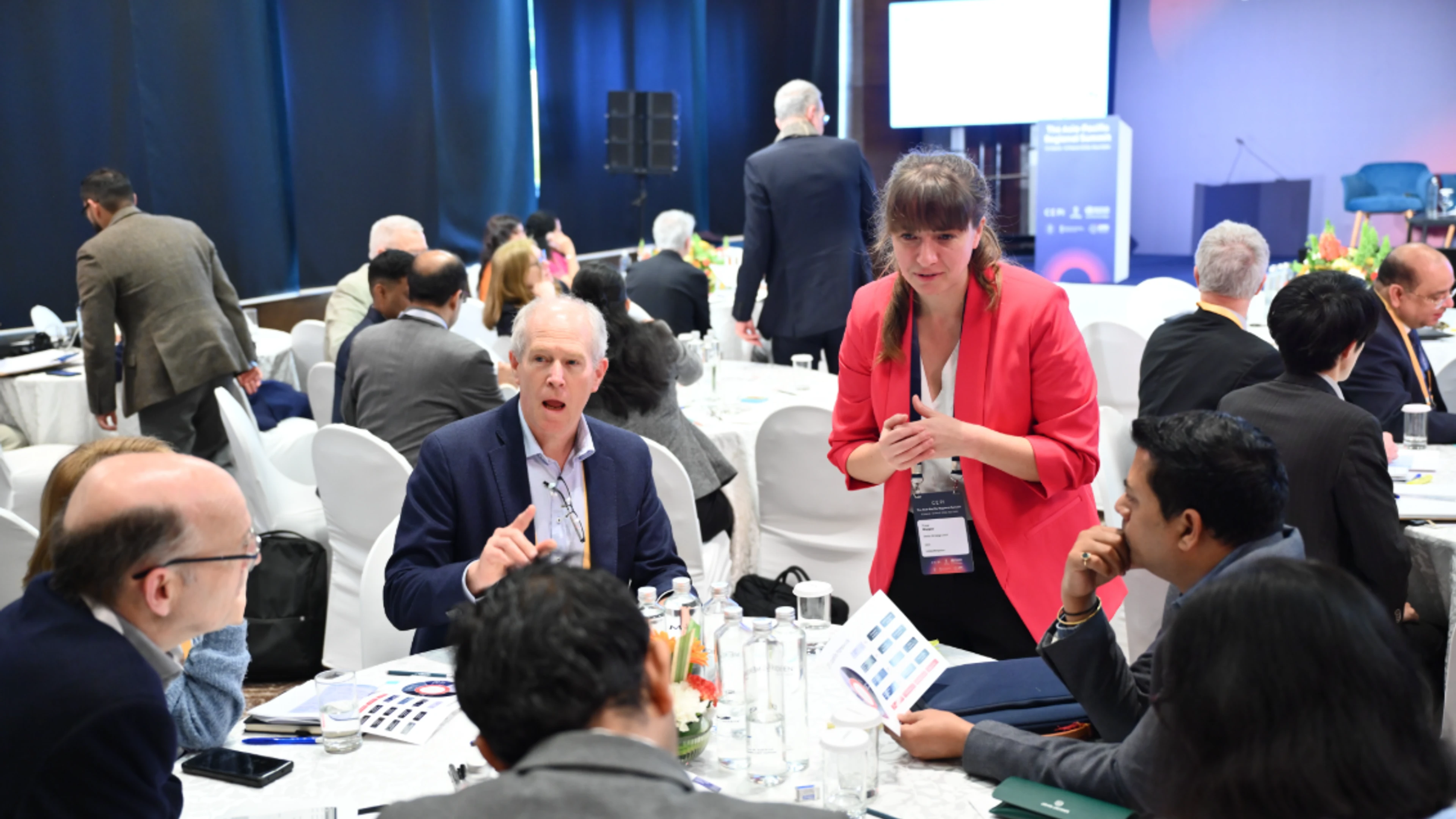
This operational challenge drove part of the agenda at the recent CEPI Asia-Pacific Regulatory Summit. More than 120 partners—spanning national regulatory authorities, public health leaders, and industry experts—gathered to discuss the capabilities needed to enable rapid vaccine research and development and manufacturing during an outbreak.
A short poll during the session revealed a critical, shared insight: responding to an outbreak depends on much more than physical infrastructure or a sudden surge of funding. Equally important is that the underlying capabilities and systems—such as pre-negotiated regulatory agreements, warm manufacturing networks, and standardised scientific protocols—are already in place and ready to mobilise the moment an alarm sounds.
Making sense of a complex preparedness system
This insight sits at the very heart of CEPI’s 3.0 Strategy. Achieving the 100 Days Mission requires a fundamental shift in how the world approaches pandemic preparedness. Instead of just focusing on creating individual vaccine products for known diseases, the global health community must strengthen the underlying capabilities needed for a faster, safer, and more equitable global response to any future threat.
But ambition alone is not enough. To bridge the gap between vision and reality, CEPI must show how the work we do today directly builds the outcomes we need tomorrow.
This is where CEPI’s refreshed Theory of Change comes in. While a "Theory of Change" might sound like an academic concept, in the complex, fragmented landscape of global health, it is an essential operational framework. It serves as a roadmap that maps exactly how our specific projects, investments and partnerships build up scientific, regulatory, and collaborative capabilities.
For example, while CEPI funds the development of individual vaccine candidates against known threats, the Theory of Change maps how these specific R&D investments collectively build a much broader capability: a globally distributed, accelerated vaccine development infrastructure that can be rapidly pivoted when a novel Disease X emerges.
By linking high-level strategy to measurable, on-the-ground capabilities, the framework moves beyond a planning tool. It helps CEPI track progress, pinpoint where the 100 Days Mission might stall, learn from experience, and adjust our approach where it matters most.
From strategy to action
A framework only matters if it guides real-world action and supports meaningful conversations with our partners.
The Asia-Pacific Summit offered an early look at this approach in practice. During a dedicated session, partners used CEPI’s Theory of Change—which at its core, is ultimately a capability framework—to explore which capabilities matter most for regional preparedness and how they can be strengthened through collaboration.
The consensus was clear. Nearly all attendees (97%) agreed on the need to move beyond a static framing of isolated capacities, like a single laboratory or a stockpile of vials, towards a more dynamic understanding of what those systems can actually do in a crisis. That is, their true capabilities. Furthermore, 92% felt that the framework provided a highly useful scaffolding to structure their complex discussions on regional priorities.
In this way, CEPI’s Theory of Change becomes a shared language, bringing diverse partners together around a mutual understanding of what preparedness actually requires and how it can be strengthened.
Looking ahead
Refreshing our Theory of Change is an important milestone, but it is only the beginning. As CEPI 3.0 is fully implemented, the framework will continue to evolve, informed by hard evidence, field learning, and ongoing dialogue with global, regional and local partners across the preparedness ecosystem.
Epidemic and pandemic preparedness is ultimately a shared responsibility; no single organisation, product or platform can deliver it alone. But by actively building the systems and capabilities required for a rapid, equitable response today, we can help ensure that when the next outbreak strikes, the world is ready to meet it.

Chukwuemeka Oguanuo: My Fellowship at CEPI
New models of health-defence collaboration: a shared plan to achieve the 100 Days Mission