Inside VIDO’s work to stay ahead of the next pandemic
From cutting‑edge preclinical models to ambitious next‑generation vaccines, researchers at VIDO are working with CEPI to help the world move faster - and smarter - when the next pandemic threat emerges.
Tucked away in the heart of Canada, the University of Saskatchewan has become an important global hub for vaccine research.
Through its Vaccine and Infectious Disease Organization (VIDO), the university brings together scientists, clinicians and global partners – including CEPI - to tackle some of the world’s most dangerous diseases.
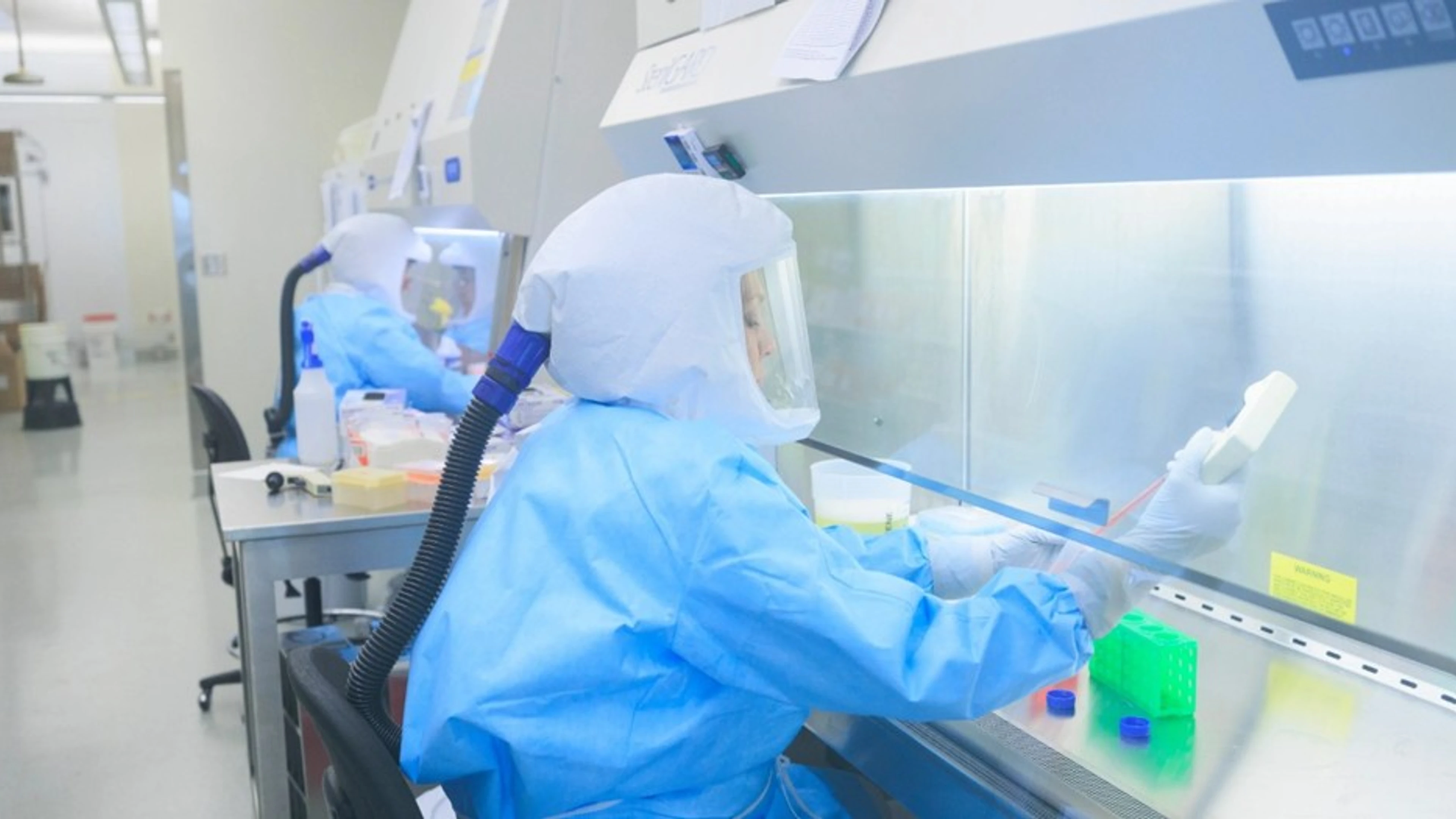
Kitted out with one of the world’s most advanced high-containment facilities, the centre, first launched over fifty years ago, was the first laboratory in Canada to isolate SARS-CoV-2, the virus behind COVID-19. It was also the first to develop a preclinical SARS-CoV-2 model. Shared with governments, industry and academic partners worldwide, these models supported the development of multiple COVID-19 vaccines, antivirals and treatments during the pandemic.
Today, with USD $23 million (CAD $31 million) in CEPI funding, VIDO plays a vital role in global efforts to prevent the next big coronavirus outbreak by developing an all-in-one vaccine to protect against different types of potentially deadly coronaviruses.
It’s also a member of our Preclinical Models Network, a group of high-containment laboratories located around the world providing early lab testing for vaccines against target CEPI pathogens.
By harnessing the latest advances in science and completing as much of the vaccine work as possible now, in peacetime, VIDO are supporting CEPI’s goal to develop safe and effective vaccines against future pandemic threats in as little as 100 days.
Following VIDO’s participation alongside CEPI and partners at an inspiring R&D Fair held by Results Canada in Ottawa this week, we sat down with two VIDO experts to discuss their quest to prevent a future pandemic – be that one caused by a coronavirus or otherwise.
What problem are you trying to solve with an “all‑in‑one” coronavirus vaccine — and why does the world need it now?
Dr. Trina Racine, Director of Vaccine Development (VIDO): The COVID-19 pandemic demonstrated the importance of having medical countermeasures available rapidly when a new virus emerges. Working with partners Seppic and VFI, VIDO’s pan-sarbecovirus vaccine is one strategy to provide broader protection against other coronaviruses that could emerge. This aligns with CEPI’s viral-family approach, building knowledge and vaccine designs across related viruses so the world has a measurable head start against both known and unknown threats. The goal is to build on this technology so it can be expanded to other biological threats and help support CEPI’s 100 Days Mission.
Dr. Volker Gerdts, Director and CEO (VIDO): Even more concerning is that the next coronavirus with pandemic potential may already be circulating in animals – and it could be only a matter of time before they make the jump into humans. Developing vaccines with broader protection gives us a critical head start to help stop an outbreak before it becomes a global crisis.
How does your work with CEPI’s Preclinical Models Network help turn early vaccine ideas into real‑world solutions?
Dr. Volker Gerdts: Medical countermeasures, such as vaccines and therapeutics, need to demonstrate effectiveness in preclinical models before clinical trials can begin. That is where VIDO’s expertise and infrastructure are so important and it is one of the reasons we were designated a national science facility through the Canada Foundation for Innovation. As the ninth organization in the world invited to CEPI’s Preclinical Models Network, our researchers are evaluating promising medicines from around the world in our high-containment facilities using specialized models, organoids and cell culture systems. This helps international developers make faster, evidence-based decisions about which vaccines are most likely to succeed.

Caption: R&D Fair organised by Results Canada in Ottawa. Credit: Results Canada
What did COVID‑19 change about how you think scientists should prepare for the next coronavirus threat?
Dr. Volker Gerdts: COVID-19 demonstrated a global shortfall in our readiness for global pandemics and reinforced the importance of preparedness. The world needs to sustain investments in science, including medical countermeasures, scientific expertise, high-containment research capacity, and manufacturing infrastructure. We need platform technologies that have an established safety record, but at the same time, can be rapidly utilized.
At VIDO, support from the Government of Canada, the Government of Saskatchewan, and private donors has been critical to building the capacity needed to respond to emerging infectious disease threats. We are also expanding our global partnerships in networks such as RAV3N and INTERCEPTOR to ensure collaboration is occurring before a crisis happens, not after. The goal is to be ready not only for the next coronavirus, but for any emerging pathogen with pandemic potential.
What’s the most exciting or surprising thing your team has discovered so far while working on this vaccine approach?
Dr. Trina Racine: What is most exciting is that this work is changing how we think about vaccine design. Instead of reacting to one virus at a time, we are learning how to anticipate related viruses by identifying what they have in common and designing vaccines that may offer broader protection. We are building in high performance and quantum computing to drive some of these developments. This reflects the broader shift from reaction to readiness — using data, advanced computing, and responsible innovation to shorten development timelines. That shift, from reacting to predicting, is a major step forward for pandemic preparedness. Just as exciting is our ability to go from vaccine design to pre-clinical testing, to GMP-compliant manufacturing all within VIDO. Having this vertically integrated ability enables VIDO to react quickly, which is essential during an outbreak or pandemic.
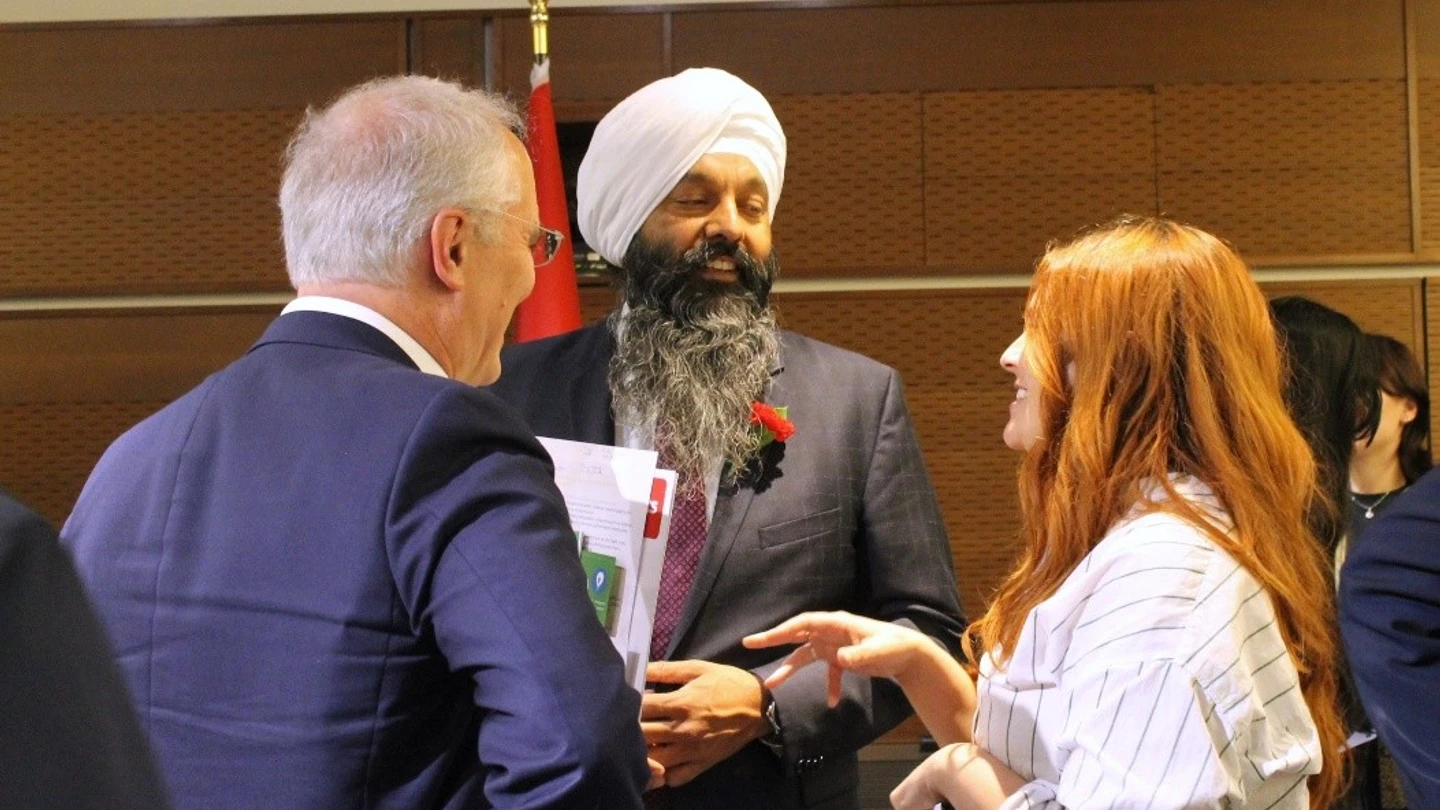
R&D Fair organised by Results Canada in Ottawa. CEO of CEPI Dr Richard Hatchett speaks to The Honourable Randeep Sarai, Secretary of State (International Development) and Taryn Russell, the Executive Director of Results Canada. Credit: Results Canada
What could your work with CEPI mean for how fast the world responds to the next outbreak?
Dr. Volker Gerdts:We fully support CEPI’s 100 Days Mission but also recognize the level of change across the system needed to meet this objective. Our work with CEPI is about helping the world move faster when the next threat appears. By developing vaccine platforms, preclinical models, and manufacturing processes in advance, we do not have to start from zero during an outbreak. This could help bring safe, effective vaccines to people much sooner.
What keeps you motivated working on pandemic threats years after COVID‑19?
Dr. Volker Gerdts: What keeps me motivated is knowing that the work we do now can help protect people before the next crisis begins. Pandemic preparedness is about protecting families, health-care workers, farmers, communities, and economies from future threats. We know that most emerging infectious diseases have direct links to animals. At VIDO, with a history in animal diseases, we are truly a one-health institute. We have the people, partnerships, and facilities to make a real difference, and that responsibility is deeply motivating.
100 days into the Bundibugyo emergency, unprecedented speed is still not enough
Chukwuemeka Oguanuo: My Fellowship at CEPI