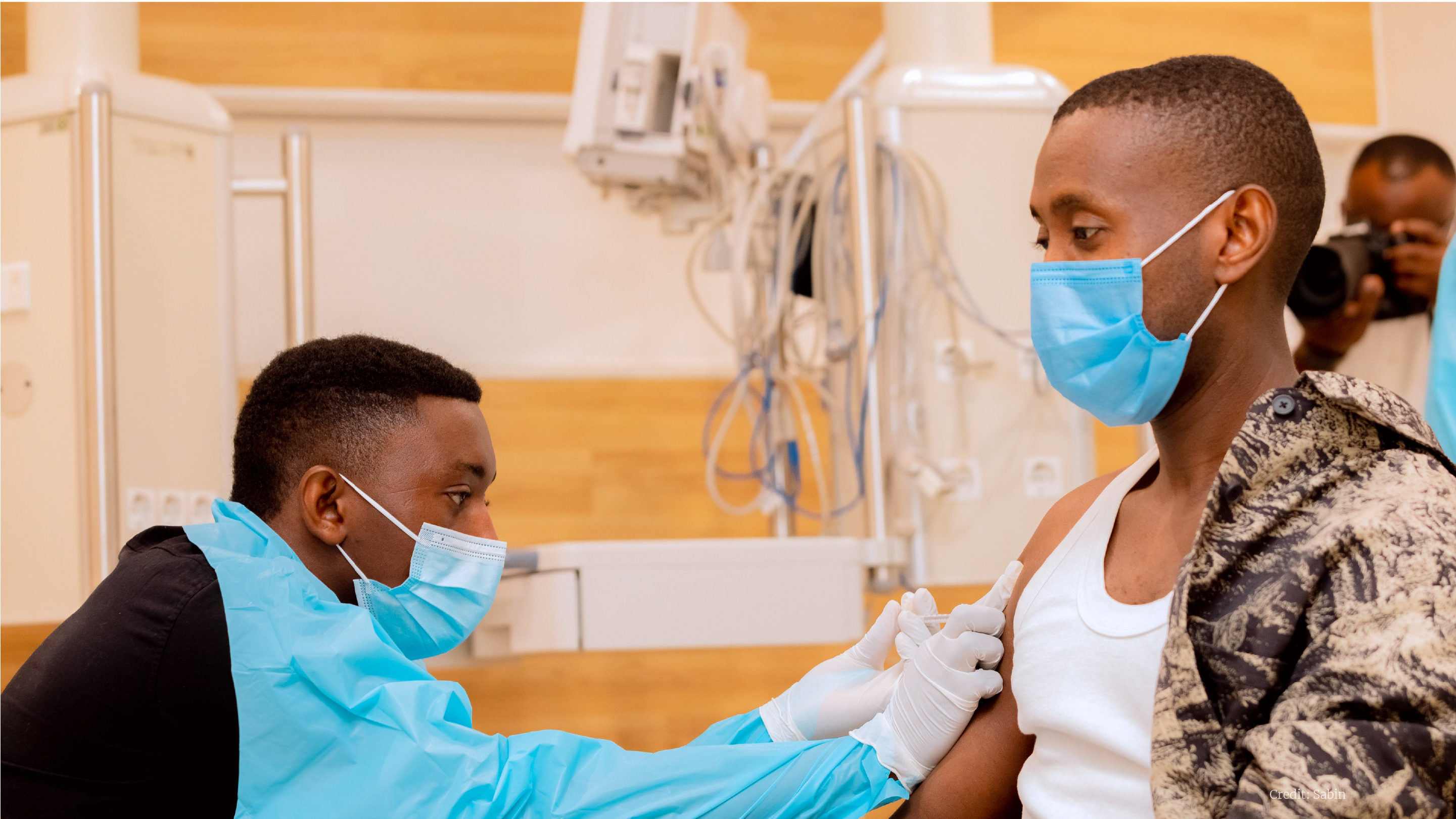
Vaccines and viral families: Tackling known and emerging threats
CEPI 3.0 will tackle both the known and the unknown by developing vaccines and capabilities for today’s epidemic risks in ways that simultaneously strengthen preparedness for future pandemics.
Across the world, an ever-growing list of viral infections cause outbreak after outbreak, year after year. Diseases like Lassa fever, Nipah, Rift Valley fever and Mpox have the potential to kill as well as to devastate communities and paralyse economies: that’s why they are priority targets for CEPI’s vaccine development projects.
Yet these diseases are only the epidemic and pandemic threats we know about. Bitter experience tells us that the next epidemic or pandemic threat could come, as COVID-19 did, in the guise of an entirely new virus.
CEPI 3.0 will tackle both the known and the unknown by developing vaccines and capabilities for today’s epidemic risks in ways that simultaneously strengthen preparedness for future pandemics.
If we continue to fight outbreaks one pathogen at a time, we will always be behind novel emerging viruses, rarely able to catch them up and never able to get far enough ahead of them to secure defences against them.
That’s why CEPI’s next five-year strategy takes a “viral family approach” to tackling both known and future emerging threats. We won’t be trying to chase individual unknown pathogens. But instead, focusing first on those most likely to pose an imminent pandemic risk, CEPI’s 3.0 work will take aim at entire viral families.
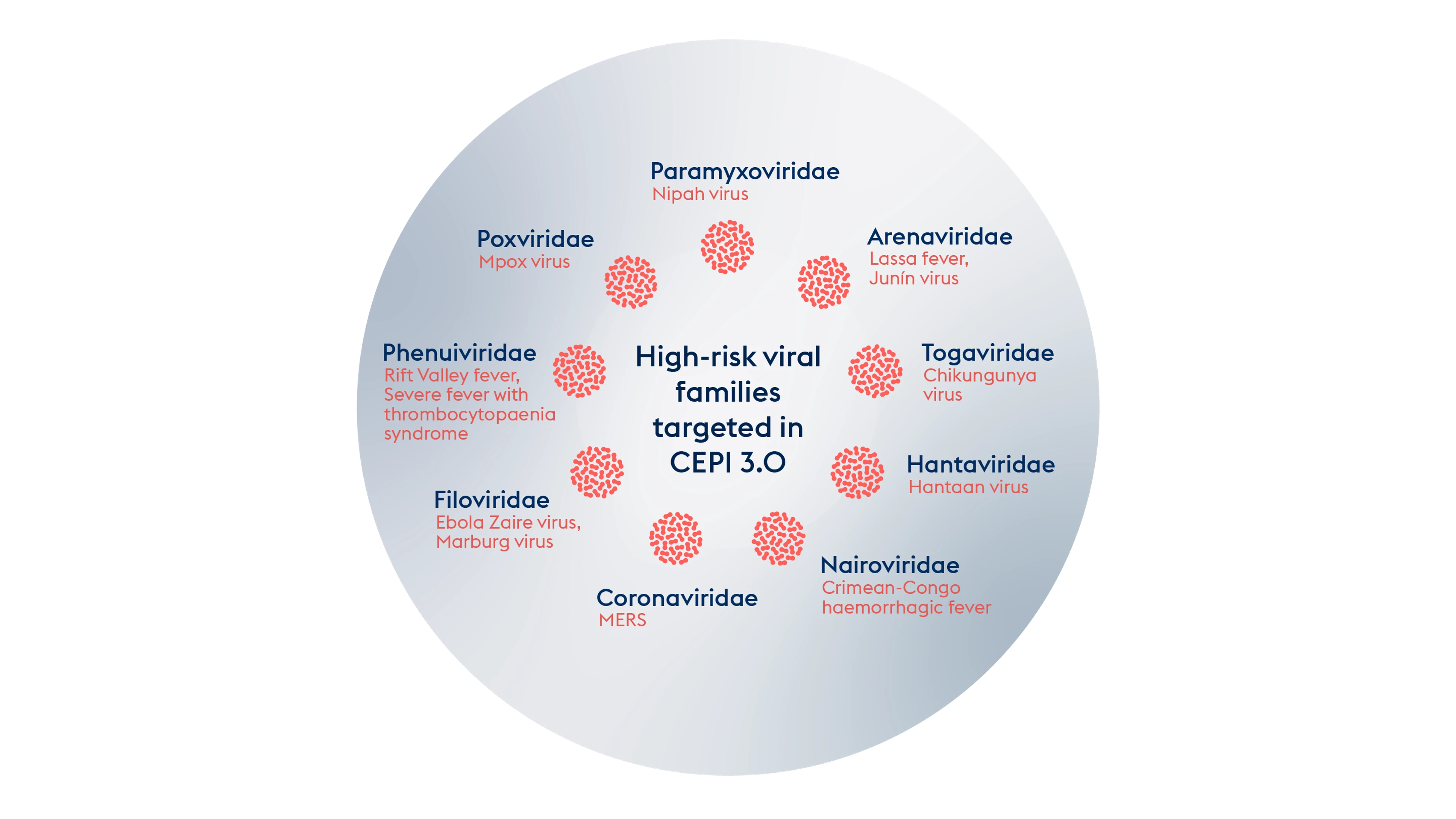
High-risk viral families and example pathogens within the family
In the next five years, we will advance vaccines and investigational reserves against many of the most threatening known epidemic threats while deepening our work across at least nine high-risk viral families, creating a detailed scientific and technical knowledge base that makes rapid vaccine design possible for any new virus within those families. This approach means CEPI’s five-year strategy will strengthen preparedness against more than three-quarters of the viral families prioritised as highest risk by global scientific experts.
As well as the vaccines CEPI and its partners already work on, we’ll also advance at least four new exemplar vaccines to early clinical trials, deepening knowledge of viral families and scientifically viable vaccine-making technologies and producing tested and proven starting points for when a novel outbreak hits.
Building the necessary scientific knowledge base for a whole range of both known and unknown viruses within high-threat families is central to CEPI’s approach to pandemic readiness and preparing for Disease X—a hypothetical novel pathogen that could emerge and become a pandemic.
And building the capabilities to do it faster and better is central to CEPI’s 100 Days Mission goal to accelerate pandemic vaccine development to within 100 days. It’s a shift from reactive response to proactive protection.
CEPI 3.0 explained: Vaccines and viral families
CEPI's Director of R&D Programmes, Dr Mandeep Singh Dhingra, unpacks the vaccines and viral families priority and its role in CEPI 3.0 and the 100 Days Mission in this explainer blog.