New research set to strengthen epidemic intelligence and modelling for Bundibugyo virus response

- Three CEPI-funded research projects will turn outbreak data into real-time insights to help guide the response and support Bundibugyo virus vaccine trials.
- CEPI's US$3.9 million investment strengthens modelling and analytics capacity in DRC and Uganda, supporting regional response capability now and for future outbreaks.
OSLO; 16 September 2026: The Coalition for Epidemic Preparedness Innovations (CEPI) is awarding US$3.9 million to three research projects that will sharpen understanding of the Bundibugyo ebolavirus (BDBV) epidemic spreading across the Democratic Republic of the Congo (DRC), helping to guide the response and support clinical trials of BDBV vaccine candidates.
With more than 7,200 confirmed cases and over 3,500 deaths reported (as of September 13) and no licensed vaccine yet available for Bundibugyo virus, robust real-time evidence is essential to bring the outbreak under control and to ensure vaccine candidates can be trialled and deployed where they are needed most.
The three projects will gather, integrate and analyse outbreak data - from disease surveillance and laboratory results to genomic and population-movement data - to produce timely, ongoing forecasts and analysis for those directing the response. Crucially, this same evidence will help to inform fast and efficient vaccine clinical trials as the outbreak evolves, while also supporting longer-term epidemic preparedness in the region.
"Good decisions in an outbreak depend on good evidence, and generating it quickly is one of the hardest challenges of any epidemic response," said Dr Arminder Deol, Head of Data Science and Advance Analysis at CEPI. "By backing modelling and analytics teams based in the affected countries, we are helping to answer urgent questions, like where the virus is spreading, how fast, and how best to evaluate and deploy vaccines and other tools, while building analytical expertise that will remain in the region long after this outbreak ends."
All three projects have a strong emphasis on capacity strengthening and open sharing of data, models and methods so that the tools built during this response can be owned, maintained and reused by national and regional teams in future filovirus outbreaks.
A summary of each new project follows:
Real-Time Epidemic Intelligence and Trial Readiness for the Bundibugyo Virus Response in the DRC (B-REACT) — led by the Institut National de Recherche Biomédicale (INRB), DRC
CEPI is committing US$2.5 million over 12 months to B-REACT, a project that will combine surveillance, laboratory, genomic and mobility data into a single real-time epidemic intelligence platform guiding the outbreak response, informing BDBV vaccine trials, and building lasting analytical capacity in DRC. Delivered with Institut National de Santé Publique (INSP), WHO, Imperial College London, the University of Oxford, Institut Pasteur, Bluesquare and Flowminder.
- Prof. Placide Mbala-Kingebeni, Head of the Department of Epidemiology and Global Health, INRB said: "This outbreak has shown that the speed of our response depends on the speed of our analysis. B-REACT embeds real-time modelling and epidemic intelligence into the national response led by Congolese scientists, with international partners strengthening a system we own."
- Prof. Dav Ebengo Mwampongo, B-REACT PI & Head of the Modelling and Epidemic Intelligence Unit, INRB, added: "Every major public health decision should be guided by timely, reliable, and nationally generated evidence. During the current outbreak, our unit is delivering real-time transmission estimates and forecasts to inform the response. B-REACT strengthens these capabilities and helps institutionalize them, creating a sustainable national platform for epidemic intelligence that will support preparedness and response long after this outbreak has ended."
Bundibugyo Response & Investment Decision-support: a Generalisable framework for outbreak analytics and vaccine portfolio strategy (BRIDGE) — led by Imperial College London
CEPI is committing US$1.1 million over 12 months to BRIDGE, a project that will model outbreak scenarios and simulate vaccine trials, weigh the value and optimal mix of vaccine investments, and build a continuously updated repository of BDBV epidemiological parameters for the wider response community. Led by Imperial College London with DRC partners INRB and INSP, the University of Kinshasa, the Université d'Orléans and WHO.
As a World Health Organisation Collaborating Centre, Imperial College London’s Centre for Global Infectious Disease Analysis and Jameel Institute bring extensive expertise in mathematical modelling, infectious diseases analysis and economic analysis to strengthen the evidence base for infectious disease preparedness and response.
- “Mathematical modelling can help turn incomplete and rapidly changing outbreak data into actionable evidence for decision-makers. In this response, our teams are working with country partners and WHO to understand how the epidemic is evolving, quantifying key epidemiological parameters and transmission dynamics, projecting possible future trajectories of the outbreak and informing on the value and costs of vaccine candidates,” said Dr Anne Cori, Associate Professor in Infectious Disease Modelling, Imperial College London. “The value of this work goes beyond the current outbreak. By strengthening modelling and analytical capacity with partners in the affected countries, we can help build a stronger foundation for responding rapidly to future epidemics.”
Ring vaccination and vaccine-design modelling — led by Makerere University School of Public Health, Uganda
CEPI is committing US$300,000 over 12 months to model "ring vaccination" strategies — vaccinating the contacts of a confirmed case, and their contacts, to form a protective ring around each case — to estimate dose needs assess trial feasibility and inform vaccine-study design and implementation. It will also apply bioinformatics to identify potential vaccine targets and assess possible cross-reactivity with other ebolavirus species. The project will also train nine Ugandan public health fellows in mathematical modelling, bioinformatics and data analytics.
Led by the IDEMU Mathematical Modelling Unit at MakSPH, the project brings together the Uganda Ministry of Health, the University of Cape Town’s Modelling and Simulation Hub, Africa, the University of California, Berkeley, the Kinshasa School of Public Health and the African Center of Excellence in Bioinformatics and Data Intensive Sciences.
- “This project will provide the Uganda Ministry of Health and regional public health institutions with evidence to support vaccine planning and trial design while strengthening outbreak preparedness,” said Mr Abel W. Walekhwa, co-lead of the IDEMU Mathematical Modelling Unit at MakSPH. “By training Ugandan public health fellows in mathematical modelling, bioinformatics and data analytics, we are also building expertise that will support responses to future filovirus threats.”
All three awards are made under Workstream 1 (Epidemiology, modelling and analytics) of a CEPI Call for Proposals launched to generate the evidence needed to support BDBV vaccine research and development.
CEPI's response to Bundibugyo virus
These new projects complement CEPI's investment in five investigational BDBV vaccine candidates - two of which are already in Phase 1 clinical trials - and a Phase 2/3 efficacy trial of BDBV vaccine candidates, expected to begin as soon as possible after recommendation by the WHO Technical Advisory Group on Candidate Vaccine Prioritization and regulatory approval. Investing in epidemiology, modelling and analytics alongside vaccine development will help provide up-to-date evidence on where and how vaccine candidates can have the greatest impact, as they progress towards late-stage clinical trials and potential Emergency Use Authorisation.
This epidemic is already the second-largest and fastest-growing Ebola outbreak in history. The scale and speed of the outbreak underscores the urgent global need to strengthen public health responses, accelerate medical countermeasures development, and invest in preparedness for increasingly complex infectious disease threats. Building modelling and analytics capacity within affected countries is central to that goal, helping enable faster, more equitable and resilient responses to future epidemic and pandemic threats, and contributing to the 100 Days Mission.
To date, CEPI’s Bundibugyo virus vaccine development programme receives funds from the European Commission through its 2026 grant under Horizon Europe to CEPI, the U.S. Department of State and CEPI's existing core funding.
ENDS
Notes to editors
About CEPI
CEPI is an innovative partnership between public, private, philanthropic and civil organisations. Its mission is to accelerate the development of vaccines and other biologic countermeasures against epidemic and pandemic threats so they can be accessible to all people in need. Central to CEPI’s pandemic-beating plan is the ‘100 Days Mission’ to develop safe, effective and accessible vaccines against new threats in just 100 days. CEPI is seeking $2.5 billion to execute CEPI 3.0, its 2027-2031 strategy which will systematically reduce the likelihood, impact and cost of epidemics and pandemics by driving the 100 Days Mission towards an operational reality. Learn more at CEPI.net.
About the Institut National de Recherche Biomédicale (INRB)
Established in 1984 and operating under the Ministry of Public Health, Hygiene and Prevention, the Institut National de Recherche Biomédicale (INRB) is the Democratic Republic of the Congo's national biomedical research institute, national reference laboratory for epidemic-prone diseases, and a WHO Collaborating Centre operating under the Ministry of Public Health. Through its national laboratory network, INRB leads diagnostic confirmation, genomic surveillance, applied research and outbreak analytics to support responses to Ebola, mpox, cholera, measles and COVID-19. B-REACT will be implemented by INRB's Modelling and Epidemic Intelligence Unit (UMIE), the institute's dedicated unit for epidemic intelligence, modelling and data analytics. UMIE develops real-time epidemiological models, spatial risk assessments, genomic and mobility analyses, and operational decision-support dashboards used by national and provincial authorities, while also strengthening modelling capacity through training at the One Health Institute for Africa (INOHA), University of Kinshasa, and the Central Africa Epidemic Modelling Network (CEpiNet).
About Imperial College London
Imperial College London is a world-leading university for science, technology, engineering, medicine and business. As a WHO Collaborating Centre for Infectious Disease Modelling, Imperial College London’s Centre for Global Infectious Disease Analysis (GIDA) conducts research to improve understanding of infectious disease threats and inform public health policy and response through mathematical modelling, epidemiology and data analysis. The Jameel Institute brings together researchers across disciplines to develop innovative approaches to tackling major global health challenges, including infectious disease outbreaks and epidemic preparedness.
About Makerere University School of Public Health
Makerere University School of Public Health is a leading institution for public health training, research and innovation in Sub-Saharan Africa. A stand-alone School with College status at Makerere University, MakSPH traces its roots to the introduction of public health training in 1954. For over seven decades, it has trained public health leaders, generated evidence that shapes policy and practice, and supported responses to major public health challenges in Uganda, across Africa and globally.
In 2025, MakSPH enrolled 1,140 students across 12 degree programmes and produced more than 350 peer-reviewed publications. Its research and partnership network spans more than 35 African countries, with collaborations involving governments, universities, research institutions and global health organisations across Africa, Europe and North America.
MakSPH researchers contributed to landmark trials that informed the World Health Organization’s adoption of voluntary medical male circumcision as a global HIV prevention strategy and, between 2022 and 2024, to the PURPOSE 1 trial of twice-yearly injectable lenacapavir for HIV prevention. The School also works closely with the Uganda Ministry of Health and other partners to support epidemic response, strengthen national programmes and turn evidence into public health action.
Media contacts
CEPI:
Email: [email protected]
Telephone: +44 7387 055214
Makerere University School of Public Health:
Email: [email protected]
Telephone: +256780770108
Scientific contact for B-REACT: Dav Ebengo, Head, Modelling and Epidemic Intelligence Unit (UMIE)
Email: [email protected]
Jameel Institute and Centre for Global Infectious Disease Analysis (GIDA), Imperial College London
Email: [email protected]
Telephone: +447863181737
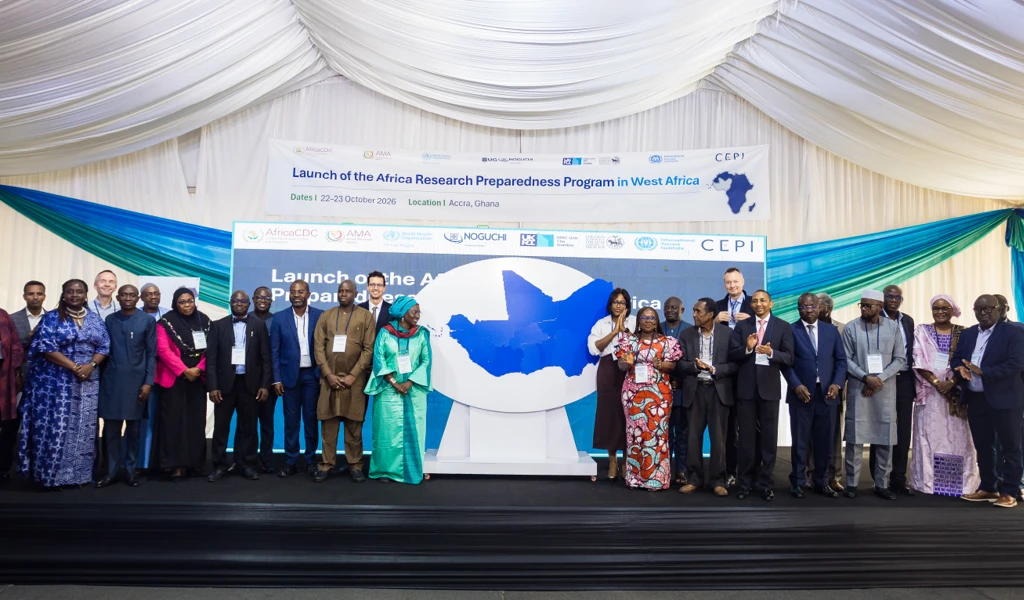
Strengthening Africa’s outbreak-ready evidence generation capabilities
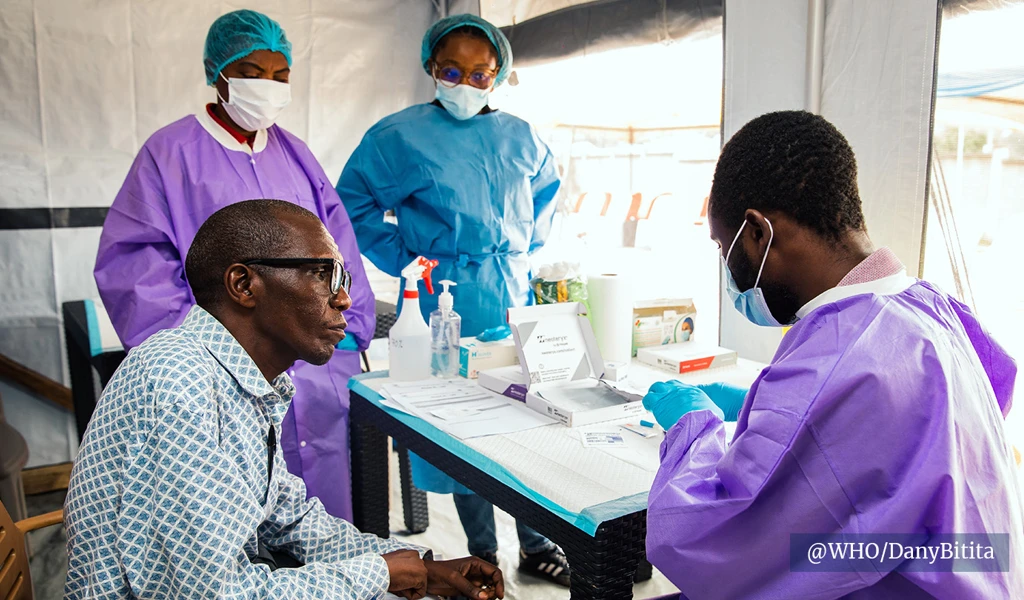
First participant vaccinated in pivotal Phase 2/3 Bundibugyo vaccine trial in DRC