The 100-Day Imperative: Pandemic preparedness, AI-driven threats, and the case for a new global architecture
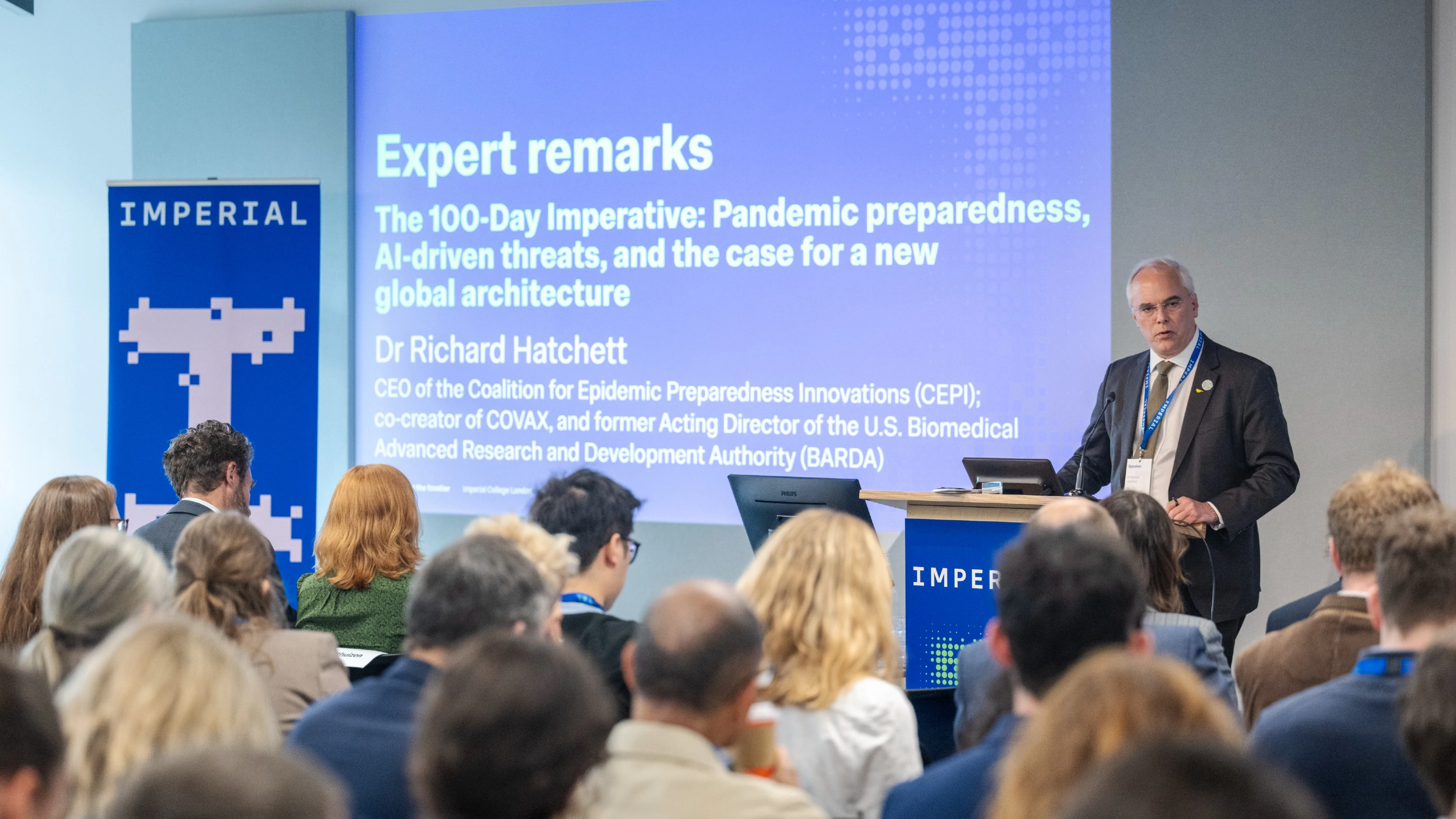
The following speech was delivered on June 10, 2026, by Dr Richard Hatchett (CEO of CEPI) at the Biosecurity at the frontier conference, hosted by Imperial College London. The high-level conference convened global leaders to examine emerging biological threats and the actions needed to address them.
I want to thank Imperial and the conference organizers for the invitation to speak today.
When I accepted the invitation I had hoped I might be able to say something meaningful about the challenge of biosecurity in our time. I had not imagined that I would be addressing you in the midst of what may prove to be one of the most challenging non-pandemic outbreaks in decades.
What we are seeing today in Bundibugyo is not an anomaly. It is a demonstration—almost a case study—of why the 100 Days Mission is no longer an aspiration, but an imperative.
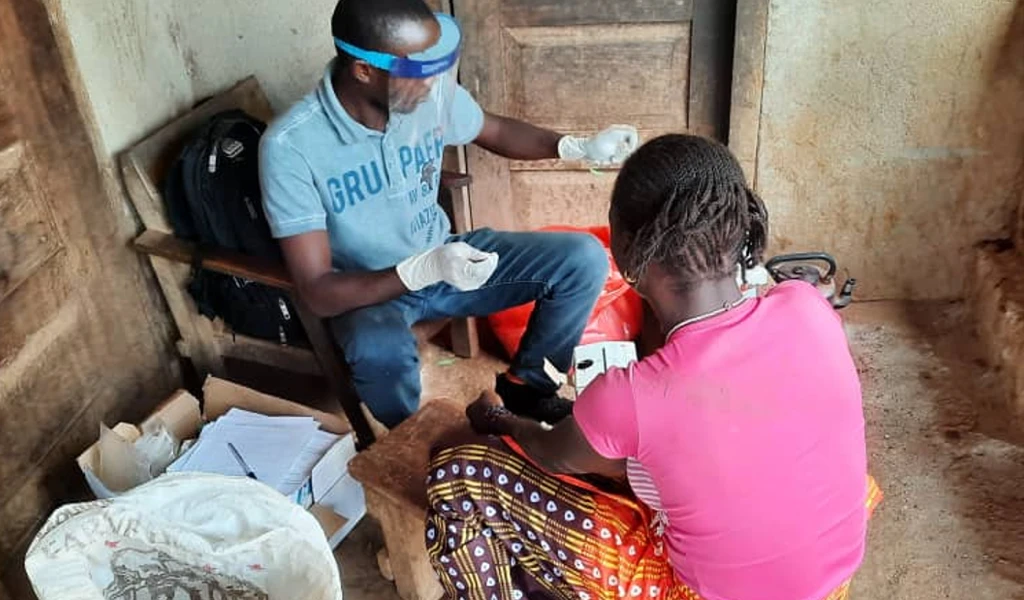
The photographs and images now coming out from Ituri employ a visual vocabulary that has become all too familiar: the faceless healthcare workers in biohazard suits, the desperately ill patients, the temporary treatment structures, the burial teams in full PPE. These are the recurring images of filovirus outbreaks.
The outbreak is occurring in a densely populated part of Africa. Cases have been confirmed across an area roughly the size of England, with a population approaching 20 million people. That would present a challenge, even here. And this is not here.
Eastern DRC presents one of the most complex conflict ecosystems in the world. It is thought that over 100 armed groups operate in the area. Goma, the largest city in North Kivu, has been controlled by M23, a Tutsi-led rebel movement, since January 2025. The ISIS-affiliated Allied Democratic Forces operate in the Ituri–North Kivu border zone. There are over 3 million internally displaced persons in eastern DRC, close to one million of them in Ituri, where the outbreak is centred. These conditions complicate every aspect of response: surveillance, contact tracing, vaccination, logistics, and, perhaps most importantly, trust.
The delayed recognition of the epidemic has resulted in it teetering on the brink of becoming a terrible humanitarian crisis. Given the context in which it is occurring, we must also view it as a proliferation event. I use that phrase carefully, and I’ll return to it.
Were actors with malicious intentions to want to get hold of BDBV specimens, they would find a ready opportunity here. This is not a hypothetical worry: we had similar concerns in 2018, and again in 2025, when M23 overran Goma, where the DRC scientific institute INRB maintains its BSL 2-3 Rodolphe Mérieux Laboratory, and Bukavu, where it manages a mobile laboratory.
The 2018–2020 epidemic in the same region was detected at a much earlier stage, with only 26 suspected cases, and we had a fully matched, safe, and effective vaccine from day one. That outbreak nonetheless took almost two years to stamp out. Almost 3,500 people developed Ebola and more than 2,200 died, alongside an unquantified number of additional deaths from treatable illnesses among persons avoiding the healthcare system. More than 300,000 doses of Ervebo® were administered; it played a critical role in ending the epidemic.
It has been 3 weeks and 5 days since the current outbreak was declared. As of yesterday, there were 550 confirmed cases with 101 deaths in DRC and 19 more cases and 2 deaths in Uganda. We are at a point roughly equivalent to week 20 of the 2018 outbreak, with more health zones affected now than then. The security situation is, if anything, worse. And of course we have no vaccine.
There are some positives. The global health architecture is not waiting for us to tell it what to do—it is already reshaping itself. New national and regional institutions have sprung into existence. New funding mechanisms like the Pandemic Fund and the Gavi Zero-Day First Response Fund are being deployed. Africa CDC and the African Medicines Agency are helping to lead the international response. DRC and Uganda are firmly in control within their borders, welcoming external support without ceding ownership. The Geneva-based organizations are fully engaged, with appropriate humility. The challenge going forward is not simply to add new components, but to ensure that the system as a whole is coherent, responsive, and capable of operating at the speed required.
When the outbreak began, we were three months into a campaign to mobilize resources for CEPI 3.0. The CEPI 3.0 Strategy and Investment Case describes the capability stack that we think the world needs to achieve the 100 Days Mission. We could not have imagined that we would so soon encounter a virus illustrating almost paradigmatically what we are talking about.
At a high level, the 100 Day Mission requires three things: technological readiness across pathogen families; pre-agreed pathways for manufacturing and regulation; and operational readiness. None of this is trivial. All of it requires sustained investment and coordination.
Bundibugyo illustrates both the progress we have made and the distance we still need to travel. We are not prepared for this specific virus, but it comes from a family—the Filoviridae—that we know a great deal about. We know what we need to target, and we have vaccine designs that can be rapidly adapted. We have preclinical challenge data showing single-dose efficacy for closely related filoviruses on some of our fastest platforms. Within two weeks of the outbreak’s identification, we had invested more than $60 million in vaccine development across three platforms. Some of these candidates could enter clinical trials within two months. That represents real progress—but it also highlights how far we remain from the level of preparedness the 100 Day Mission implies. The goal for CEPI 3.0 is simply to be as prepared for other high-risk pathogen families as we were for Bundibugyo.
This is also, in many respects, the first Public Health Emergency of International Concern of the AI era. Artificial intelligence is already shaping the response—helping us navigate complexity, analyze epidemiological data, and place the outbreak in the context of prior events. We are learning how to integrate these tools into real-world response, and the potential is considerable.
But the same advances lower barriers to the creation or modification of biological threats. The convergence of biology and AI is reshaping the landscape of risk as well as the landscape of opportunity. That dual reality is why this conference matters, and why I hope we can return to it in the panel.
Let me conclude with a more general reflection.
This year marks the 50th anniversary of William McNeill’s Plagues and Peoples. One of McNeill’s central insights was that human societies create the conditions in which diseases emerge and persist. Hunter-gatherers had different parasite loads than town-dwelling agriculturalists. The old diseases of childhood—measles, mumps, smallpox—are inherently diseases of civilization, requiring communities large enough to sustain continuous transmission. Pathogens, like people, exploit the opportunities their environments afford.
So what opportunities does the world we have created in the 21st century—with its hyperconnectivity, its synthetic biology, its artificial intelligence—afford to pathogens? The medieval plagues and the old diseases of poverty may fade. But that does not mean we are done with epidemic disease. New modern plagues will arise. And they will spread—unless we are prepared.
Susan Sontag begins her essay “Regarding the Pain of Others” with a reflection on Virginia Woolf’s Three Guineas, in which the famously pacifist Woolf asks a male correspondent, also of an anti-war disposition, “whether when we look at the same photographs [depicting the terrible cost of war] we feel the same things.”
“Woolf,” Sontag writes, “professes to believe that the shock of such pictures cannot fail to unite people of good will.” But Sontag will have none of it: “No ‘we’ should be taken for granted when the subject is looking at other people’s pain.”
The human solidarity implied by a “we” must be proved—it must be earned—and it must extend to the subjects depicted in the frightening images.
When we see images from a Hot Zone, when we describe incidents such as the Bundibugyo epidemic as “proliferation events”, when we talk about biosecurity in such contexts, we should think about how such words sound in the ears of our Congolese and Ugandan brothers and sisters.
If we want to persuade them that our solidarity is genuine, we must extend our concept of biosecurity to include them. We have to care as much about preventing Ebola outbreaks as we care about stopping them. That means a longer-term, more resolute commitment to epidemic prevention, preparedness, and response—and to building capacity in the places where the risks are greatest.
That is what the 100 Days Mission, properly understood, demands of us.

Final preparations underway for pivotal Phase 2/3 Bundibugyo vaccine trial
Tracking Lassa fever: Where are we up to?