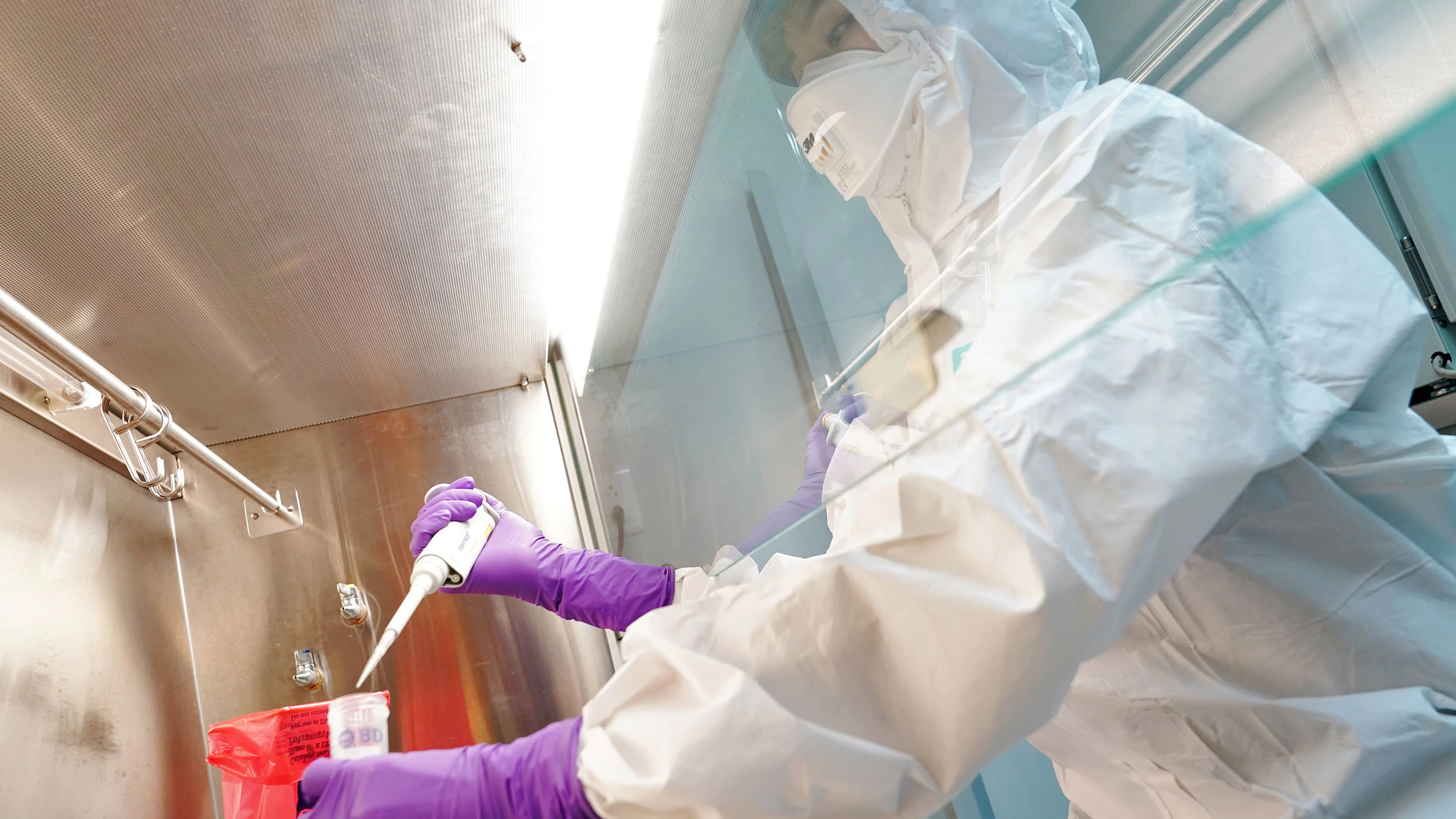
- KDCA, IVI, ST Pharm and Seoul National University to develop AI-designed SFTS vaccine
- The deadlysevere fever with thrombocytopaenia syndrome (SFTS) virus affects regions in Asia
- $16m CEPI-funded research could see an SFTS vaccine tested in people for the first time
- Research will generate vital scientific knowledge that could accelerate vaccine development against similar viruses in as little as 100 days
SEOUL, Republic of Korea, 9 DEC—Leading scientific organisations in Korea including the Korea Disease Control Agency (KDCA), International Vaccine Institute (IVI), ST Pharm and Seoul National University (SNU), are joining forces with CEPI to advance a new AI-designed mRNA vaccine that could become the first-ever vaccine to protect against a potentially deadly tick-borne disease affecting countries in Asia.
Cases of severe fever with thrombocytopaenia syndrome, or SFTS—caused by the SFTS virus, also known as Dabie Bandavirus—have been reported in China, Japan, Korea, Taiwan and Vietnam. Symptoms can emerge mainly after people are bitten by infected ticks or possibly infected domestic animals like cats and may include fever, low blood cell count, vomiting and diarrhoea. In severe cases, predominantly affecting elderly people, illness can progress into multiple-organ failure and death. Countries like Korea have identified SFTS as a significant public health concern and made the development of an SFTS vaccine a national priority.
CEPI is providing up to US $16 million to the project, led by IVI, to test the vaccine’s safety and ability to generate a suitable immune response in healthy adults in preclinical and Phase I/II clinical trials in Korea. This is the first time an SFTS vaccine candidate could be tested in people.
SFTS virus has been selected for this research as a representative (or “prototype”) pathogen from the Phenuivirus family. Successfully designing a vaccine against the SFTS virus would provide a blueprint for developing vaccines against other closely related Phenuiviruses. The learnings, data and materials from this research could therefore give the world a head start in rapidly developing safe and effective vaccines against Phenuiviruses with pandemic potential that may emerge in the future and pose a threat to public health, livestock and agriculture.
This approach—where pre-established knowledge about a virus and how to make vaccines against it is used to fight new outbreaks—was vital to the unprecedented speed at which life-saving COVID-19 vaccines were developed. Earlier research into two known coronaviruses, SARS and MERS, meant scientists had already solved many of the critical vaccinology problems for coronaviruses in advance and could pivot their efforts quickly when SARS-CoV-2 emerged in early 2020.
“We don’t know what the next pandemic will be, but we know that we need to be prepared. By advancing an SFTS vaccine, we will both help to address an increasingly menacing viral threat in Asia and generate scientific knowledge that could dramatically accelerate our response to the next Disease X” explains Dr. Richard Hatchett, CEO of the Coalition for Epidemic Preparedness Innovations (CEPI). “That way, we won’t be wasting valuable time creating a new vaccine from scratch if a deadly new Phenuivirus emerges in the future and we’ll have a fighting chance of stopping an incipient pandemic in its tracks. This partnership between CEPI and world-leading scientific institutions based in Korea will make the region, and the world, a safer place.”
In this case, scientific knowledge generated by the SFTS vaccine research will be added to CEPI’s ‘Disease X Vaccine Library’, a comprehensive collection of data and information on vaccines against viruses from different families that can be rapidly adapted for use during outbreaks of related viruses with pandemic potential. This approach is central to the 100 Days Mission: a global goal, spearheaded by CEPI and embraced by G7 and G20 nations including Korea, to develop pandemic-busting vaccines in just 100 days.
The vaccine candidate to be tested in the trial led by IVI is being designed by KDCA and SNU, using ST Pharm’s proprietary SMARTCAP® platform technology already validated in a Phase I clinical trial. The Houston Methodist Research Institute (HMRI), a CEPI partner based in the US, will also support its development, using its cutting-edge AI techniques to speed up and help design safer and potentially more immune-boosting components of the vaccine within a matter of hours rather than weeks or months.
Dr. Seungkwan Lim, Commissioner of KDCA said: “The development of an SFTS mRNA vaccine through international cooperation will further strengthen our capacity to respond to emerging infectious diseases. We will continue to expand the Vaccine Library for priority pathogens.”
Dr. Jerome H. Kim, Director General of the International Vaccine Institute, said: “IVI is proud to lead this consortium of outstanding partners in advancing the world’s first clinical development of an SFTS vaccine. By combining mRNA technology, artificial intelligence, and proven technical expertise, we aim not only to tackle a serious and growing public health threat in Asia but also to generate knowledge that can accelerate vaccine development for future emerging diseases. Our shared commitment is to ensure that, if successful, this vaccine and its future iterations will be accessible to the people and countries that need them, when they need them.”
Dr. Mooje Sung, CEO of ST Pharm, said: “ST Pharm is delighted and very proud to partner in this AI-based mRNA vaccine development project for an SFTS vaccine, leveraging our proprietary SmartCap® and STLNP® platforms as well as our global CDMO capabilities. We will support the safe and efficient development and production of the SFTS vaccine candidate.”
“ST Pharm will provide expertise spanning the entire vaccine manufacturing process, from R&D to preclinical and clinical stages, and ultimately to commercialization, ensuring stable supply based on our globally certified GMP standards and manufacturing systems. Furthermore, the data and materials generated during this research and manufacturing process are expected to contribute to accelerated preparedness for future pandemic response. Through this collaboration, ST Pharm aims to contribute to improving health and safety in Asia and around the world, while continuously strengthening capabilities in global drug development and pandemic response. We believe this project provides a valuable opportunity to combine scientific knowledge and innovative technology to prevent deadly diseases, such as SFTS, and to establish a foundation for rapid response to future pandemics.”
Dr. Soo-Jin Jung, Senior Researcher at RNA Biology Lab, Seoul National University, said: "We are excited to apply our advanced mRNA vaccine design capabilities to address this critical public health challenge. By integrating our proprietary stabilizing UTR sequence, we aim to create more stable and effective vaccines that can serve as a platform for future pandemic preparedness. This partnership exemplifies how academic innovation can directly contribute to global health security.”
Jimmy Gollihar, Chief of Translational Sciences, and Head of Antibody Discovery and Accelerated Protein Therapeutics (ADAPT) at Houston Methodist Research Institute, said: "At Houston Methodist Research Institute, we are applying advanced AI and computational immunology to dramatically shorten the time it takes to move from a viral genome to a rationally designed vaccine candidate. By working hand-in-hand with our partners in Korea and CEPI on this SFTS 'prototype' vaccine, we aim to design components that are both safer and capable of eliciting broad, durable protection, while generating insights that can be rapidly transferred to other Phenuiviruses. This collaboration brings the 100 Days Mission to life in the lab—building the tools, data, and know-how the world will need to respond at speed and scale when the next Disease X threat emerges."
CEPI and the consortium of Korea-based scientific partners are committed to enabling equitable access to the vaccine outputs of this partnership, in line with CEPI’s Equitable Access Policy. CEPI has a right to fund further development of the vaccine beyond Phase I/II trials and the agreement ensures the establishment of investigational reserves to test the vaccine in clinical trials during an outbreak. If successful, the partners are committed to affordable pricing of the vaccine to enable access to the vaccine in low- and middle-income countries. Vaccine production capacity has also been allocated so that the vaccine can be manufactured and made available as quickly as possible. Should the vaccine be successful, the partners are committed to tech transfer of vaccine materials to manufacturers in low- and middle-income countries in Asia that may be affected by SFTS for local production and accelerated access to vaccine doses. Clinical trial data generated by this project will be published open access to benefit public health and research communities.
This joint partnership is the latest in a number of multimillion dollar R&D investments made by CEPI to support world-leading scientific partners in Korea advancing national and global epidemic and pandemic preparedness. The Korean Government has been working with CEPI since 2020 and recently contributed additional funding to advance CEPI’s goals.
This press release is also available to read in Korean.
ENDS
About CEPI
CEPI was launched in 2017 as an innovative partnership between public, private, philanthropic and civil organisations. Its mission is to accelerate the development of vaccines and other biologic countermeasures against epidemic and pandemic disease threats and enable equitable access to them. CEPI has supported the development of more than 70 vaccine candidates or platform technologies against multiple known high-risk pathogens and is advancing the development of rapid response platforms for vaccines against a future Disease X. Central to CEPI’s pandemic-beating five-year plan for 2022-2026 is the ‘100 Days Mission’ to compress the time taken to develop safe, effective, globally accessible vaccines against new threats to just 100 days.
About the Korea Disease Control and Prevention Agency (KDCA)
The Korea Disease Control and Prevention Agency (KDCA) is the national public health authority of the Republic of Korea. Guided by its vision of “Toward a safer and healthier future,” KDCA serves as the central governmental agency for evidence-based public health management and healthcare R&D.
KDCA’s mission is to protect people from infectious diseases, reduce the national disease burden, and strengthen research capacity and preparedness to address health risks. Through its affiliated Korea National Institute of Health (KNIH), KDCA supports vaccine development, immunological research, and global partnerships for epidemic and pandemic preparedness.
As a trusted public health partner, KDCA works closely with international organizations, including WHO, CEPI, and IVI, to promote equitable access to vaccines and strengthen global health security.
Slogan: Ensuring healthy lives with KDCA, your most trusted partner. For more information, please visit https://www.kdca.go.kr.
About The International Vaccine Institute (IVI)
The International Vaccine Institute is an international organization dedicated to advancing vaccine discovery, development, and delivery—especially for vulnerable communities. Through research, partnerships, and innovation, IVI enhances global health, strengthens pandemic preparedness, and ensures equitable access to life-saving vaccines worldwide.
About ST Pharm
ST Pharm is a leading API CDMO specializing in antiviral treatments. Since the 1980s, the company has supplied intermediates and APIs for Zidovudine, the world’s first AIDS treatment, and in 2010, ST Pharm joined as a CDMO for Sofosbuvir, the world’s first HCV treatment, providing API from clinical stage to commercialization.
Working with global pharmaceutical companies from the clinical stage, ST Pharm offers optimized process technology development, analytical methods, GMP validation, preparation of CMC documents for regulatory approval, and manufacturing of raw materials for commercialization. The company supports small-scale clinical samples and large-scale commercialization with globally certified GMP capabilities, holding cGMP certifications from the USA (FDA), EU, Korea, Japan, Australia, and WHO.
In 2001, ST Pharm expanded into the new drug CDMO business by developing oligonucleotide synthesis and purification technology, establishing itself as one of the top three players in the global market. Building on its mRNA platform technology developed since 2018, ST Pharm has secured proprietary patent technologies, including SmartCap® and STLNP®, and extended into circular RNA platform technology. The safety of and manufacturing capabilities for ST Pharm’s SmartCap® technology was validated in a Phase I clinical study for COVID-19 in the early 2020s. This competitive edge was further strengthened by the acquisition of AnaPath, a European CRO company, in late 2019, enabling ST Pharm to provide one-stop services for the entire new drug development process. The company continues to expand its mRNA CDMO business through global contracts, such as a 25B KRW lipid supply agreement for LNP formulation, and ST Pharm continues to expand its mRNA CDMO business and collaborative partnerships from R&D to commercialization. For more information, please visit https://www.stpharm.co.kr.
About the RNA Biology Lab at Seoul National University (SNU)
The RNA Biology Lab at SNU is interested in all fields of RNA research. We especially focus on identifying regulatory RNAs and their associated factors, and dissecting their molecular mechanisms through a combination of sequencing, biochemistry, structural biology, and proteomic approaches. We also explore their functions in diverse biological contexts, including stem cells, cancer, viruses, and RNA-based therapies.
CEPI Press
- Email:
- [email protected]
- Phone:
- +447387055214
KDCA
- Email:
- [email protected]
- Phone:
- +82 43 913 4150
IVI
- Email:
- [email protected]
- Phone:
- +82 2 881 1386
ST Pharm
- Email:
- [email protected]
- Phone:
- +82 2 527 6320
Seoul National University
- Email:
- [email protected]
- Phone:
- +82 2 887-2343
UK rabies vaccine trial could also unlock protection against Disease X
_Andreas%20Kravik%20(Norway)_Chris%20Elmore%20(UK)_Abnet%20Zeleke%20(Ethiopia)_Mamadou%20Ndiaye%20(Senegal)_Sept%2021_2026.webp)
Ethiopia, Norway and UK commit US$240 million to CEPI’s global plan to tackle epidemic and pandemic threats