Outbreak ready, research ready: strengthening West Africa’s research ecosystem
- In West Africa, where seasonal Lassa fever outbreaks occur every year, clinicians have spent year after year treating hundreds of patients with Lassa fever, with limited capacity to conduct clinical research towards finding better treatment and prevention tools for this disease.
- CEPI’s Research Preparedness Programme is helping close this gap by strengthening clinical trial infrastructure, systems and skills at frontline sites across West Africa — transforming them into trial sites capable of generating vital clinical trial evidence before and during outbreaks. We spoke with two of the CEPI-supported site leads to learn more about the impact this is having.
___________
“We are now prepared! We are now ready to conduct research,” said Dr Yusuf Bara Jibrin, Chief Medical Director of Abubakar Tafawa Balewa University Teaching Hospital—one of the largest hospitals in Nigeria’s north-eastern state, Bauchi.
Jibrin is celebrating this moment because while his team has spent year after year treating hundreds of patients with Lassa fever, he and his co-workers have also been unable to make much-needed scientific progress. “We had basic infrastructure,” he said. “And the patients are there. But...we didn’t have a specific area where we could do clinical research.” Without the right facilities, trained staff, or regulatory systems, vital scientific studies such as clinical trials of health and medical interventions to generate evidence on whether and how well they work simply could not be done.
Dr Jibrin’s experience is echoed hundreds of kilometres away in Nigeria’s Ebonyi State, where Professor Benedict Azuogu leads another CEPI-supported site. “Epidemics don’t announce themselves before they come,” he said. “So, if you’re not prepared, you will be taken unaware.” His institution has long served as a referral centre for Lassa fever, but like the Bauchi hospital, it too didn’t have the structured research systems needed to quickly generate vital clinical evidence.
Until now.
Closing the gap between responding to an outbreak and having the research capabilities to study and learn from it is exactly what CEPI’s Research Preparedness Program aims to do. It helps to get the scientific and clinical systems needed to respond to emerging infectious diseases ready before an outbreak occurs, while helping shift research institutions from reactive to proactive and from externally driven to regionally led and owned.
Impact on the ground
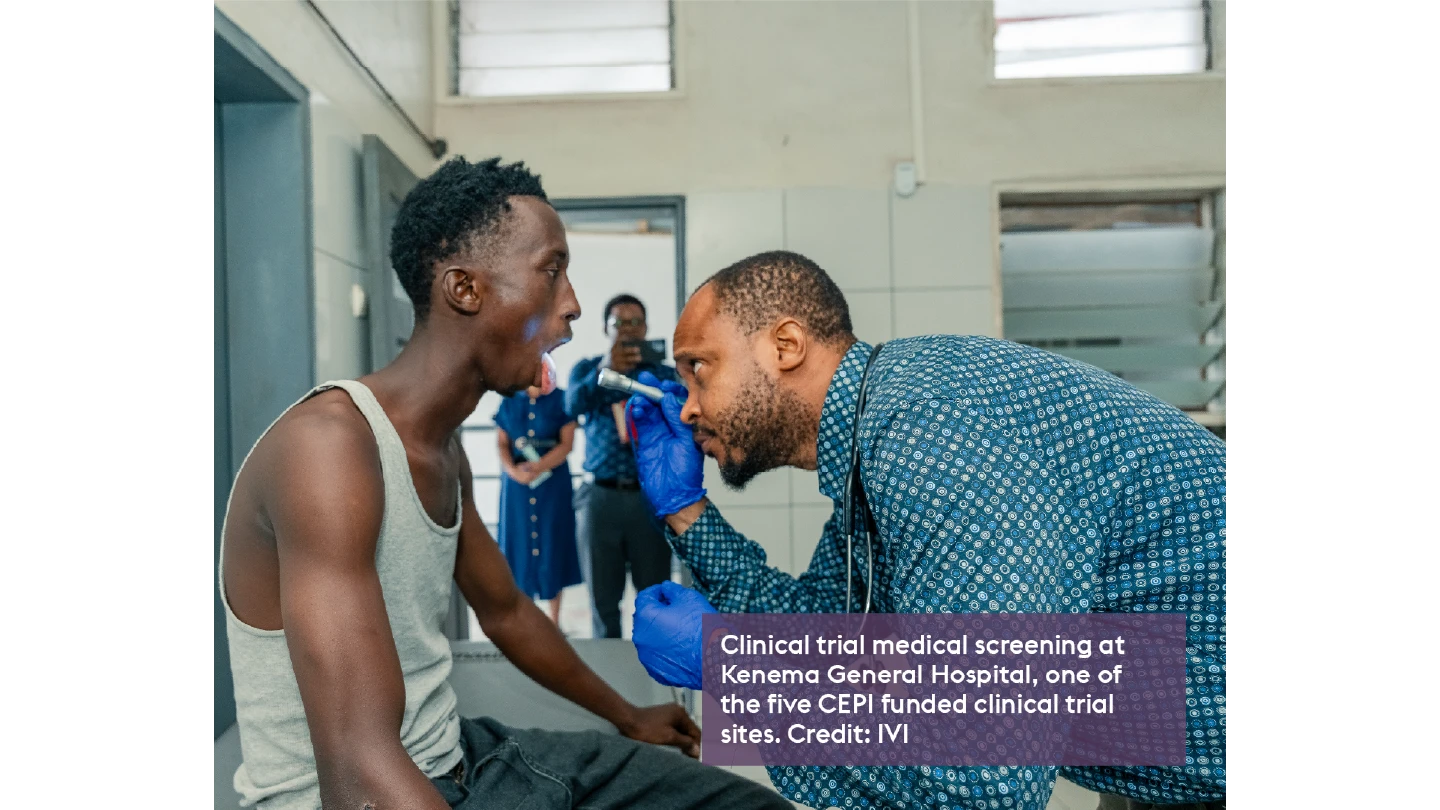
In West Africa, CEPI’s Research Preparedness Program, implemented by its Technical Coordinating Partners, MRC Unit - The Gambia and International Vaccine Institute (IVI), supports five clinical trial sites, helping bolster research capabilities, with the Bauchi and Ebonyi partnership among the most mature.
In Bauchi, where once there were bare patches of land, there are now vaccination rooms, an emergency area, observation spaces, counselling rooms, a data centre and reliable power and water - all designed to function even during an outbreak. In other words, the hospital now has a fully functioning purpose-built clinical trial centre. “This facility alone shows that we can do a lot of research,” Dr Jibrin said. In Ebonyi, a new clinical trial unit was built in record time. “It is the fastest built facility of such magnitude in our institution in more than 30 years,” Azuogu said.
At both sites, the transformation has been rapid and practical: new laboratory equipment, fridges and freezers for cold-chain storage, improved computer systems and trained multidisciplinary teams capable of activating quickly when a new threat emerges.
These advances are already delivering impact. The Bauchi Teaching Hospital is preparing to launch a Lassa fever drug trial. “CEPI’s intervention actually fast-tracked what we had started,” he said. “[Now] we are ready and can go ahead and start the project.”
In Ebonyi, the strengthened systems have also contributed to the site's long-term sustainability. The site has recently been selected as one of five Nigerian centres for the SPARKLE Phase 3 trial, a Novartis sponsored study for sickle cell disease. All trial activities will take place in the new clinical trial unit built through CEPI’s Research Preparedness Programme. For Professor Azuogu, the selection is a clear validation of the programme’s impact and proof that the strengthened systems and infrastructure are enabling the site to attract and deliver high-quality research.
Ensuring this kind of sustainability for clinical trials is important. Routine clinical trials keep teams active and systems sharp, so when a Lassa fever outbreak or a Disease X threat emerges, sites like Ebonyi are already warm, ready and able to respond at speed.
Scaling for Africa
These site‑level transformations are part of a much larger continental vision. Africa CDC’s hub and spoke clinical trial model is designed to link established research “hubs” — large, experienced, multi-function centres — to emerging “spoke” clinical trial sites that are less advanced and may be closer to outbreak-prone areas. Hubs provide technical strength, mentorship and coordination, while spokes bring geographic reach and the ability to generate frontline evidence. The idea is that, together, they will form a continent‑wide outbreak research system embedded within national systems, allowing trained and ready researchers to conduct studies and gather real-time scientific evidence whenever and wherever there are disease outbreaks.
CEPI’s Research Preparedness Program supports both the hubs and spokes, helping to expand the network so that more African sites can extend their existing research capacity to a level that is also capable of generating crucial emergency evidence during future outbreaks.
CEPI’s support is also reshaping how research reaches communities. In Nigeria, mobile clinical trial units are being piloted to extend capacity beyond hospital walls. These fully equipped, self-contained research spaces can travel to rural settlements, outbreak hotspots or areas where permanent infrastructure is difficult — bringing research closer to communities that might otherwise struggle to access tertiary hospitals.
This growing network of clinical expertise and infrastructure is central to achieving the 100 Days Mission — a goal to develop vaccines against new pathogens within 100 days, and forms a key part of CEPI 3.0’s priority area to build and strengthen the networks needed to deliver it. “Preparedness is not a single act or a single actor; it is a long-term commitment to resilience,” said CEPI Senior Clinical Development Operations Lead Christof Vinnemeier. “By investing in people, systems and infrastructure today, standing arm-in-arm with Africa CDC, we are ensuring that African research sites can positively shape the response to disease outbreaks, wherever that outbreak occurs and whether they are responding to known pathogens like Lassa fever or the next Disease X.”
For clinicians like Jibrin and Azuogu, the change is profound. Outbreaks still erupt and sick patients still come seeking urgent help. Now, though, their hospitals are not just places for emergency treatment, but also research facilities where scientific progress is made. Across the continent, more sites are joining this network, strengthening Africa’s ability to generate routine and emergency clinical evidence at speed and to be research-ready for the next outbreak.

5
clinical trial sites strengthened across West Africa

1
major Phase 3 trial secured

100 days
Clinical trial sites will be crucial to help deliver pandemic vaccines in 100 days